
How to Power Hike a 100-Miler at UTCT
Rodney Long proved that you don't need to be a runner to complete one of SA's toughest endurance events - the RMB Ultra-trail Cape Town 100-Miler

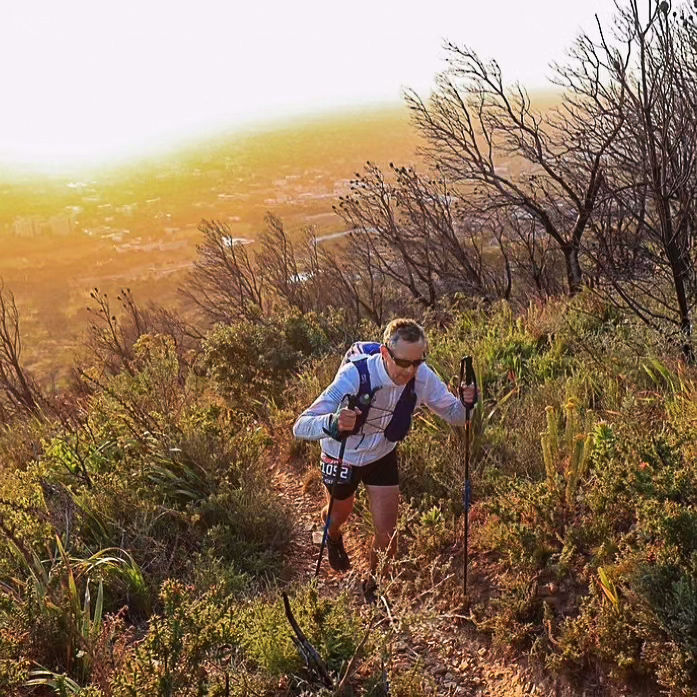
Rodney Long, 57
Endurance power hiker, timber exporter, race founder
Fifty-seven-year-old Rodney Long used to be just an ageing runner with dodgy knees – until he discovered power hiking.
Having already run two Two Oceans ultras, the 65km Ultra-Trail Cape Town, two AfricanX stage race events, and the Hobbit Trail Run in the Eastern Cape, Long was certainly more than a casual enthusiast. But wear and tear on his knees from old rugby injuries and road races began to make running difficult; so instead of giving up on his love of endurance running, he decided to become a power hiker.
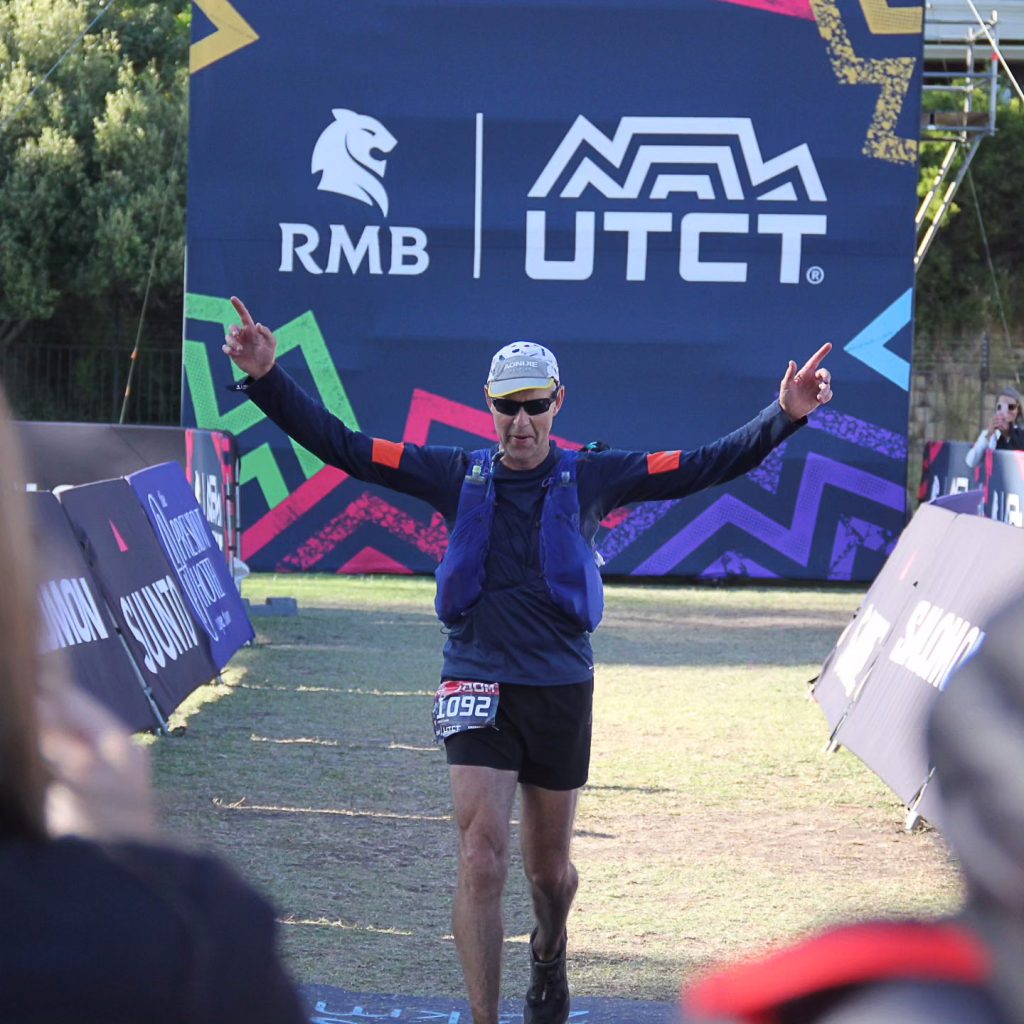
The results were life-changing, as Long rediscovered endurance events through hiking rather than running. He’d already completed such arduous events as the double Grand Drakensberg Traverse (440km, 20 000m of climbing); but in 2022, he finally took on the RMB UTCT 100-miler (160km), making it to the finish in 38 hours and 34 minutes, well inside the 45-hour cut-off.
His success proves that with the right training and pacing, joining UTCT’s 100 club isn’t restricted to runners.
Runner’s World: First up, let’s get to that UTCT 100-miler you did in 2022. Quite an achievement, to have power-hiked to a finish?
Rodney Long: Yeah, there were 94 finishers that year, and I came 77th. So I still had plenty of time to spare! And there were 48 DNFs that year, which was quite high, because we had a black south-easter that particular weekend. It was quite challenging. But I thoroughly enjoyed it – it was a great challenge, and I’m always up for one of those.
RW: You obviously beat a lot of ‘runners’, then?
RL: When you power hike, you’re pretty consistent, and you reel in quite a few runners on these big events. It’s interesting how that happens.
RW: What is power hiking?
RL: A lot of people ask that! It’s a fast walk. But it’s not an uncomfortable walk, like the race walkers. You’re basically maintaining yourself on the climbs, and your overall speed is pretty average across the terrain.
I do have a few runner friends who tease me about it; but in long races, a lot of them struggle to keep up with me. Now and then I look back at them, when they follow me, and they have to break into a little jog to keep up.
RW: How do you define yourself?
RL: I don’t see myself as a trail runner, purely because I don’t run on the trails anymore. Although I could, if I wanted to; I think it’s just a precaution on my side. I would just call myself a power hiker.
View this post on Instagram
RW: Do you think a lot of people would be better off power hiking rather than running, but their ego stops them?
RL: I definitely don’t think there’s an ego, especially in trail running. If you were talking about road running, then that’s debatable! But definitely not in trail running. Trail runners in general are very down-to-earth people – there are no egos involved.
It’s all about being out in nature and enjoying it. And even when you’re competing in these races, the camaraderie is incredible.
RW: Is training for power hiking similar to run training for an event? Do you do speed work, intervals, things like that?
RL: Definitely. My coach is James Montgomery (therunproject.co.za), and I’m his longest-standing athlete. He started coaching me before he even started his coaching business, and we’re good mates. So he’ll give me training for the weeks, and it’ll include things like intervals, mountain sessions, and strength work in the gym.
So, yeah; it’s full-on training, and he and I chat daily. He coached me when we did the Drakensberg Grand Traverse. Had me doing intervals up Nursery Ravine on Table Mountain, with a sandbag in my pack!
RW: Is power hiking a skill, too?
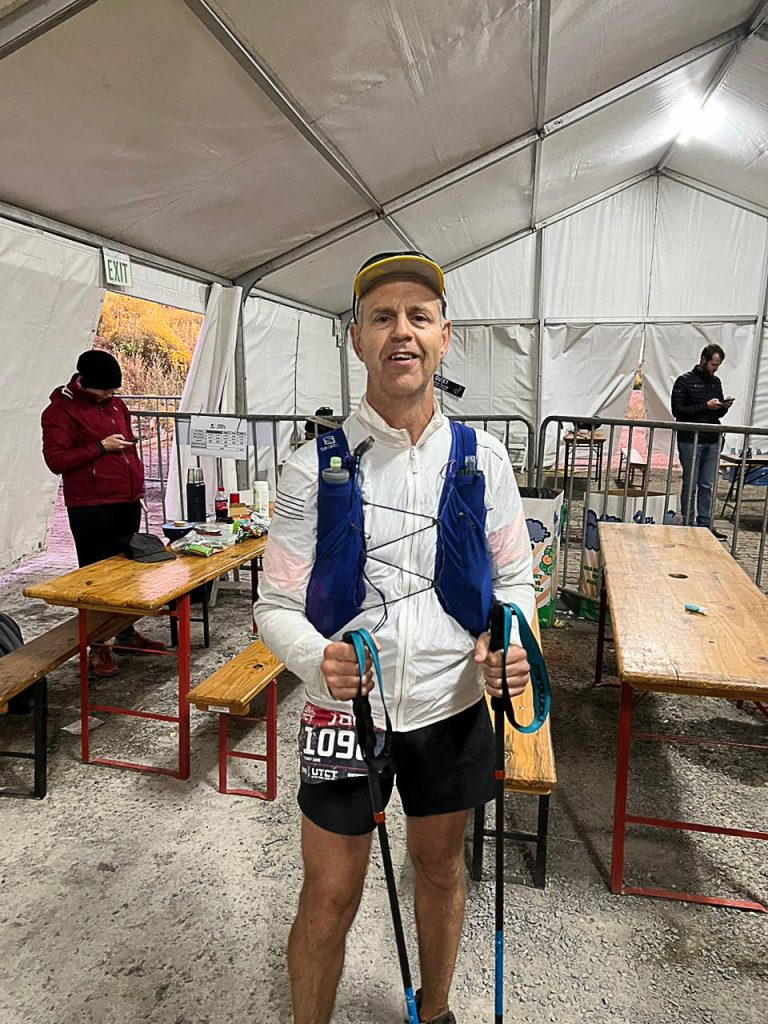
RL: Yeah, absolutely. For me, the poles are instrumental – I mean, I would never do these races without my poles. I find they give your legs a lot of relief, because you use your upper body to help you; especially on the climbs. Even on the downhills, poles give you more confidence – and they’ve saved me from a major fall a couple of times.
RW: But I guess you have to train your upper body for poles?
RL: No, you must. Definitely.
RW: What sort of training did you do, building up to the 100-miler?
RL: I gave myself a good year of training with James. It was progressive; it started with building consistency, and a base. Typically, it was 10 to 15km, three times a week.
Then I’d also have two strength sessions, one hour each per week. Then on the weekend, Saturday and Sunday, that would be what I called mountain time… like, a 15 or 20km mission on the mountain. And then, over time, we’d build that up.
And it was never about training distance; it was all based on time. James would say: “Okay Rodney, I need you to be on the mountain for three hours,” and that’s it. So whether it was 10, 15 or 20 kilometres, he’d work on time, out there on the mountain.
And obviously, building in elevation. And when we were training for the 100-miler specifically, we mimicked the course. So I knew the route well.
The most important thing was doing nighttime training, because your body isn’t used to being awake at those stupid hours. So you need to go and train and tell your body, “Hey, you need to stay awake now.” And for that 100-miler, we did two nights on the mountain.
So in training, we’d actually go and do night missions. Sometimes I would do a 24-hour training mission in the Cederberg, for example. That way I would also be navigating, which takes your mind off the fact that you’re getting tired.
RW: I’d imagine dealing with a lack of sleep is one of the major challenges of doing a 100-miler?
RL: Yeah… it’s just about getting used to it. I remember bumping into so many people, at night, who were struggling just to stay awake. You have to train for it. And I’ve found that my nutrition intake is vital, to keep my body fuelled – not doing that leads to fatigue.
For me personally, I can do 48 hours; but if I get into a third night, then I start looking for some sleep. When we did the Drakensberg Traverse, we did 72 hours with no sleep, and that was tough.
I’ve always found from 2am to 4am was the most difficult time to stay awake. But what’s interesting is, as soon as the sun starts to show, it’s literally like a light switch – you’re not tired anymore. It’s incredible.
RW: What does your nutrition plan look like, for long events?
RL: So for the 100-miler, my go-to was Tailwind. It’s a nice A-to-Z nutrition, and it covers all the bases. But by Simon’s Town, I didn’t want to see any Tailwind – or smell it, or taste it. Then I started taking in whole foods.
I even got my partner to make sure I had a pizza ready at Noordhoek. I don’t know why, but I was craving a Hawaiian pizza, I was craving pizza. And then I ate things like watermelon, and chips. And the salted potatoes – I started smashing those at aid stations, along with Coke.
RW: How do you dress for something like a 100-miler? Anything special?
RL: Typical trail gear. But I used long socks with gaiters for the 100-miler, purely to keep grit and sand out – that worked very well for me, actually. And the year with that black south-easter, when we went up Platteklip Gorge, we all put on our full waterproof gear. It was <itals>so cold…
RW: And headgear?
RL: So… I had my Silva head torch. It had a USB battery, but it can also take AAA batteries as a back-up – useful, when you’re out there for two nights. I also had a spare torch with my support crew.
RW: Do you change your socks regularly?
RL: I did change them once, for the 100-miler – in Noordhoek. After we completed that whole beach section, which was, like, 9km, we had a lot of sand. So I put on brand-new socks, and changed my shoes. I also did a lot of training with alternating two pairs of shoes.
RW: Do you put Vaseline on your feet, to prevent blisters?
RL: I don’t – I’m not a Vaseline person. I use Balega socks, and I find those amazing, especially the mohair ones.
But again, it depends on what works for different people. I have a lot of friends who put Vaseline on, and it works great for them. I find my socks feel very slippery inside… I don’t know, it’s a weird sensation.
But one thing I found with those big distances is that you’re not going to avoid getting some form of blister. I remember at the Noordhoek aid station, I told my partner to “open it and cut it off”. And I basically got her to patch it properly, tape it up, and I just hoped for the best to get to the finish.
RW: And then, I think probably the most important question: how do you deal with it mentally? How do you think about being out there for 40 hours?
RL: I work in blocks. So, literally, aid station by aid station, for me.
In 2022 – I’ll never forget – when I got to Kalk Bay, I was already in a bad space. That blister was definitely taking a mental toll on me. I’ll be honest, I was already thinking of pulling the plug at Kalk Bay.
And then I got a second wind, between Kalk Bay and Simon’s Town. I got to spend that entire section by myself. And I had plenty of time to talk to myself, and give myself a good lecture. And not finishing was definitely not on the cards, after that.
RW: I was going to say – what was the internal lecture about?!
RL: It was basically motivating myself – saying, “You’ve put in all this training, so you just need to dig deep.” During some of the training sessions, I also learned that you go into these dark spaces; but you do come out of them. You just need to be patient.
And that’s exactly what happened. By the time I got to Simon’s Town, I was feeling great again. And from there, I had no issues.
RW: So in fact, the first half was tougher than the second?
RL: Definitely – by a long shot. It’s a big mental change; because at the beginning, you’re moving away, facing towards Cape Point. But once you turn at Kommetjie… you feel like you’re going home.
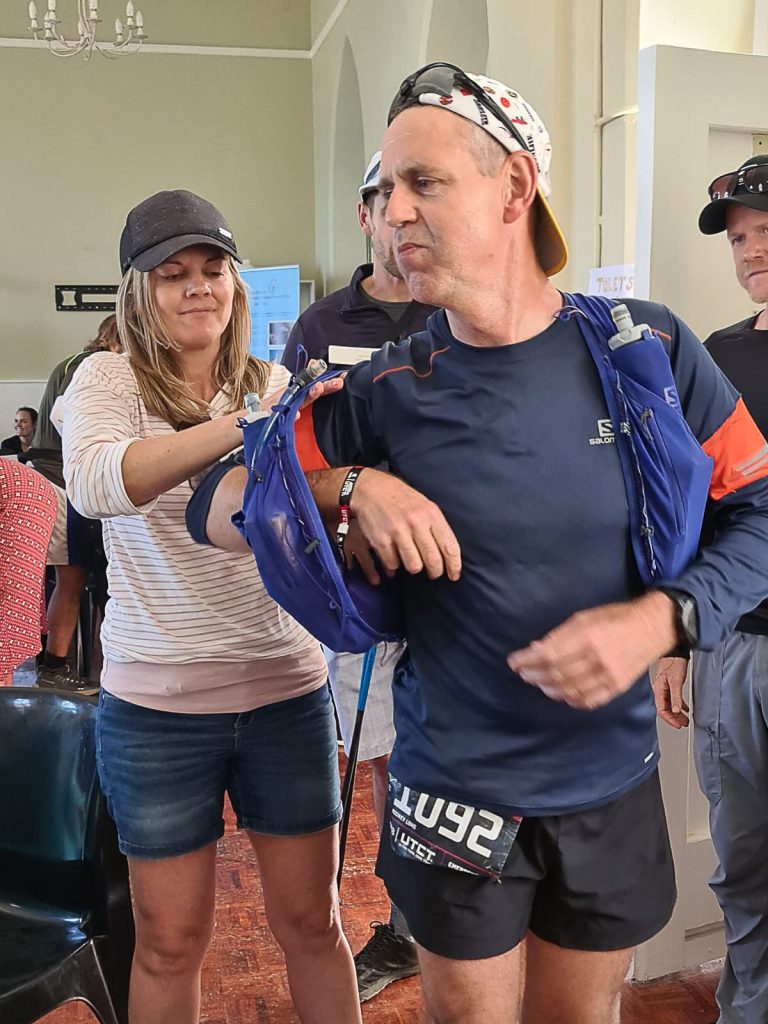
RW: How do you figure out your pace, over such a long distance?
RL: I definitely worked on a timing per aid station; and I think I was pretty bang-on for all my aid stations, from a time perspective. I worked it out based on my training pace – while also being realistic, that you’re going through the night. For two nights. And also the guidance from my coach, James Montgomery. He was instrumental.
RW: If you had to sell the idea of doing the 100-mile Ultra-Trail Cape Town… what would you say?
RL: That route is absolutely beautiful. And it’s brutal, at the same time. But I would strongly recommend it. The views along the route are out of this world, and the support from the aid station helpers and random people along the way is phenomenal.
And you don’t have to be some super-athlete to do it. You can be a power hiker like me; and if you stick to your game plan, you’ll finish well within the cut-off.
The Cederberg Stage Run
2-5 September 2027, Kromrivier
Rodney Long is more than an accomplished runner and power hiker; he’s also a passionate race founder. He’s started the three-day Cederberg Stage Run, which was held for the second time in September this year.
Distances: 32km, 24.5km, 10km
Check out the details for the 2027 race at thecederbergstagerun.co.za
READ MORE ON: trail trail-running ultra-trail cape town