
How to Train a Runner’s Heart
Your heart is the most important muscle in your body. Treat it right for a lifetime of strong running.


Nancy Wells crossed the finish line of her local half marathon feeling elated. At 55, she has completed more than 60 marathons and half marathons over the past two decades, yet this was her slowest half marathon ever (2:41:26). What made it remarkable wasn’t the time, but the fact that it was the same race where she had suffered a heart attack a year earlier.
In 2024, Wells had planned to run the marathon, but a disrupted training block led her to switch to the half marathon. On race morning, she felt unusually fatigued and experienced chest pressure, but attributed it to the humid weather. After struggling through the opening kilometres, she called her husband to say she wasn’t feeling well. The last thing she remembers is reaching the 7km mark before collapsing. She woke up in the hospital with no memory of what had happened and was told her heart had stopped beating.
A retired nurse running nearby immediately performed CPR, helping to save her life. Wells spent four days in hospital, underwent a procedure to insert an artery stent, and completed a supervised cardiac rehabilitation programme. Once her heart function returned to normal, she set her sights on running again – and finishing the race.
For many heart patients, aerobic exercise is a vital part of recovery, strengthening the heart and improving circulation. Running can also reduce the risk of future heart disease, with the American Heart Association recommending at least 150 minutes of moderate or 75 minutes of vigorous aerobic exercise each week to support cardiovascular health.
…you’re already reducing the risk of a cardiac event just by being a runner…
So you’re already reducing the risk of a cardiac event just by being a runner, but why stop there when you can optimise your heart to become even stronger and healthier?
Not every cardiovascular event can be prevented – genetics, sudden triggers, and sometimes simple chance all play a role – but there’s still a lot you can do to keep your heart fit and give it the best possible care so you can enjoy running for as long as you want to run.
This Is Your Heart on Running
The human heart is a fist-sized organ that accounts for roughly 0.5 percent of your body weight. Despite its relatively small size, it is the hardest-working muscle in your body, beating more than 100 000 times a day (typically faster in women than in men). It’s an involuntary muscle, operating without your conscious control or thought, contracting in response to its own electrical impulses. And it’s the only muscle in your body that works all the time and doesn’t get tired, because it’s made up of special cells (called cardiomyocytes) that resist fatigue.
Your heart is a powerful pump that keeps blood moving throughout your body. With each beat, it sends oxygen and nutrients to your cells while carrying away waste, like carbon dioxide. At the same time, it helps maintain healthy blood pressure and, working with your blood vessels, adjusts how fast and where blood flows based on your body’s needs.
Once you start running, your circulation shifts within seconds, and your sympathetic nervous system triggers the fight-or-flight response, usually related to stress, danger, or intense physical activity, when the brain signals the release of hormones like adrenaline. Your circulation and musculoskeletal systems work together to send oxygen-rich blood to your muscles. “All it’s thinking is, how do we get oxygen where it needs to go as fast [as possible],” says Tamanna Singh, MD, director of the Sports Cardiology Centre at Cleveland Clinic.
“There’s this period of adjustment from rest to stress,” she says. “When you first start running, it takes a minute or two to get into the flow, and that’s the recruitment process.” Your heart pumps faster and contracts more forcefully with each beat to eject more blood to oxygen-hungry muscles, while also removing heat and metabolic byproducts. Between beats, it relaxes more quickly. While skeletal muscles and the skin see an increase in blood flow, nonessential body organs, like the kidneys or the stomach, experience a decrease (one reason why eating right before a run can cause GI distress, as digestion is impaired). Once your body gets used to the sudden change, it transitions to a “steady state” or equilibrium.
That’s during a single run. In the long term, consistent running can lead to actual structural changes to the heart. The same way skeletal muscles grow over time when we lift weights, the heart muscle grows when we require it to keep pumping blood faster to support the higher oxygen and energy demands of the exercising muscles (which leads to an increase in VO₂ max, the maximum rate of oxygen your body can use during exercise). Consistent running can also lower your blood pressure—in response to your muscles requiring more oxygen and blood flow, your body allows vessels to widen to meet the demand. As the heart muscle grows stronger and more efficient, your resting heart rate decreases.
Measure What Really Matters
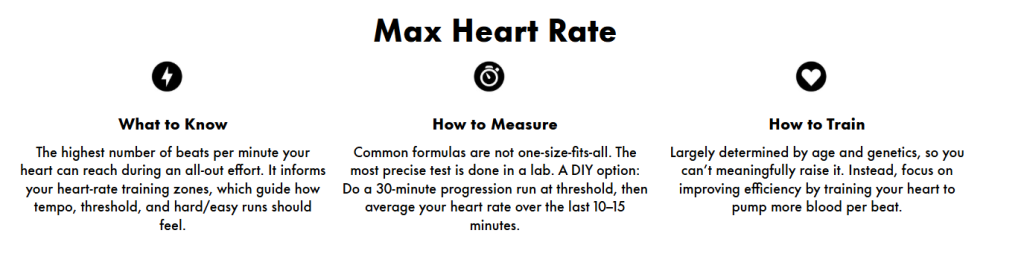
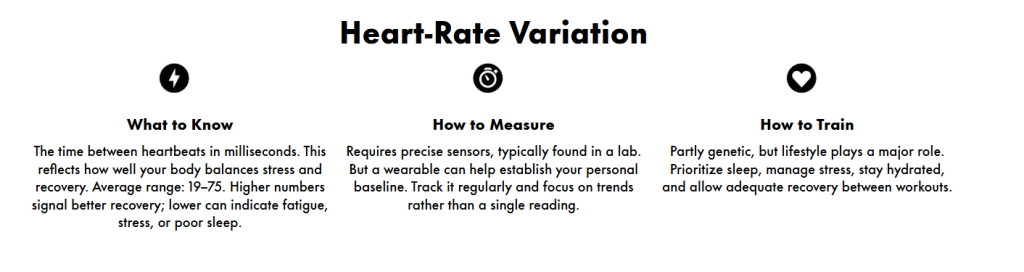
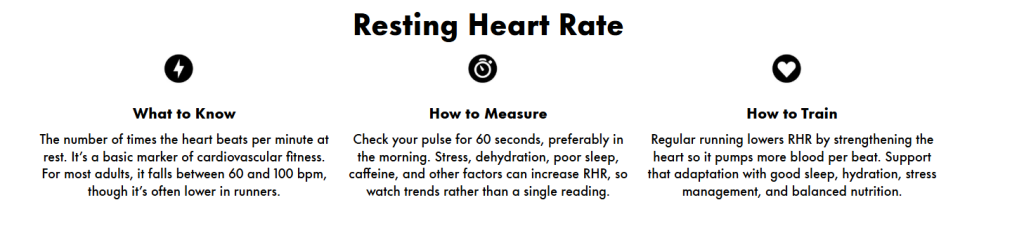
If you use a wearable watch or fitness device, it continuously collects and analyses your personal health data, providing access to more metrics than you might ever need. When it comes to your heart, here are the stats you should focus on and how much you can train your heart to improve them.
Your Smartwatch is not a Doctor!
The wealth of data accessible via wearable tech can be useful. But as one manufacturer, Garmin, notes, its “watches are not medical devices, and the data provided by them is not intended to be utilised for medical purposes and is not intended to diagnose, treat, cure, or prevent any disease.” You can protect your heart and improve your fitness with tried-and-true methods such as rate of perceived exertion (RPE), a subjective 1–10 scale of how a workout feels.
What to Feed Your Heart
As an athlete, you already know carbs are your friend, that replenishing with protein after exercise is essential for muscle growth, and that a balanced diet powers your ability to run.
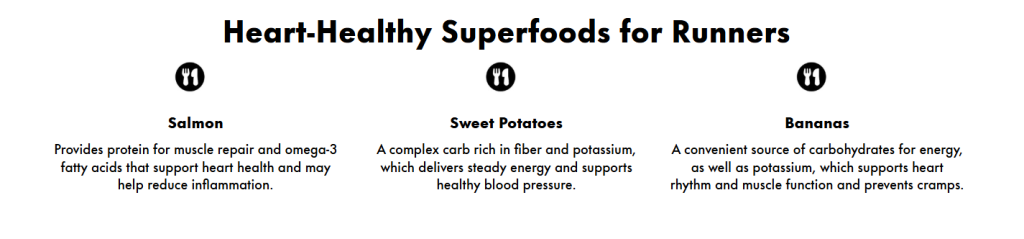
When it comes to your heart, the advice is pretty similar. “Eating whole and more natural [food] is the way to go,” says Jessica Smith, registered dietitian, licensed dietitian nutritionist, and personal trainer based in the USA. On the other end of the spectrum are nutrients you should try to avoid, such as saturated fats: They raise low-density lipoproteins (LDL, “bad” cholesterol), which build up in arteries and increase the risk of developing cardiovascular disease. Ultimately, any food is okay in moderation, Smith says. “There’s [no] one food you shouldn’t eat,” she says. What remains true is that some foods are especially good for a runner’s heart. Here’s your guide.

Food Myths That Should Be DQ’D
Myth: You Should Eat a Low-Carb Diet: This idea is one of the most common, and harmful nutrition myths for runners. Carbs are exactly what we need, says sports dietitian Alex Larson, RD. Even if you’re getting enough calories, insufficient carbohydrate intake puts you at risk for under-fueling.
Myth: Low-Fat and Low-Sugar Are Better: Anytime manufacturers remove something, they add something else [to improve taste], Smith says. These foods are often higher in unhealthy fats, calories, or artificial ingredients.
Myth: Snacking Is Bad: “For runners, snacking is an additional opportunity to get the nutrition you need for the day, because it can be hard to get enough in just three meals,” says Larson. There’s also a solid case for a bedtime snack. “[It] gives your body the energy it needs so you’re not waking up hungry,” says Dallas-based dietitian Christyna Johnson, RD. And it can help you sleep better.
Myth: Vegan Is Healthier: There is no universally perfect diet, and avoiding entire food groups can come with health risks. “When you cut out major food groups like meat, seafood, and dairy, you’re also cutting out key nutrients,” says Johnson. And you may miss out on essential nutrients like iron, ferritin, vitamin B12, zinc, and calcium.
Myth: You Should Run Fasted: While skipping breakfast before a morning run is meant to force your body to use fat reserves for fuel, it is more likely to break down muscle tissue instead, says Johnson. That includes skeletal and cardiac muscle tissue, which not only hurts performance in the short term but also sets you up for overtraining.
Myth: Fruit Has Too Much Sugar: “Did we forget there are also nutrients in fruit?” says Johnson. Fruit contains important phytochemicals like vitamin C, vitamin E, and beta-carotene, which serve as antioxidants, phytoestrogens, and anti-inflammatory agents. It also contains fibre, potassium, and folate, all of which support overall health and disease prevention.
Keep Your Heart Well-Dressed
Extreme temperatures force your cardiovascular system to work harder, so protecting yourself from the elements can help reduce cardiac strain.
🥶 WINTER
Cold temperatures cause blood vessels to constrict, which can raise blood pressure and make the heart work harder to circulate blood.
→ Do This: Dress in insulating layers to keep your core warm. A vest or thermal layer over your torso can help retain heat, and a hat prevents heat loss from the head.
🥵 SUMMER
Heat forces the heart to pump faster to circulate blood to the skin so the body can cool itself. Dehydration can increase strain on your cardiovascular system.
→ Do This: Wear light-colored, breathable clothing and a hat to limit sun exposure. Use sunscreen and hydrate before, during, and after a run, ideally with electrolytes during longer workouts.
How to Manage Stress
That looming deadline at work that keeps you up at night may feel minor in the grand scheme of things, but add your parents’ upcoming surgery and your children’s busy schedules, and stress quickly builds. Stress is a natural human reaction that can be positive, keeping you alert, motivated, and ready to avoid danger. But without periods of relief, it can accumulate and turn chronic, flooding your body with high levels of cortisol and adrenaline, triggering inflammation and increasing your heart rate and blood pressure.
By running, you’re already practising one of the best lifestyle habits for managing stress. At first glance, somewhat ironically, running acts as a stressor itself, triggering a temporary release of cortisol. But that short-term surge serves a purpose: It helps your body adapt, making you better equipped to handle future stress. Over time, running becomes a potent antidote to stress, lowering baseline cortisol and adrenaline levels while boosting endorphins—natural mood elevators and painkillers.
“It’s helpful to consider factors that we can control and improve: Embrace social interaction, build a community of trust, recognise risk factors, and incorporate wellness and mindfulness practices,” says Tamanna Singh, MD.
In fact, one of the most powerful tools for de-stressing is practising mindfulness, says Emily Saul, MS, a licensed mental health counsellor in Boston who works with athletes. That can be done through breathing exercises, meditation, or visualisation.
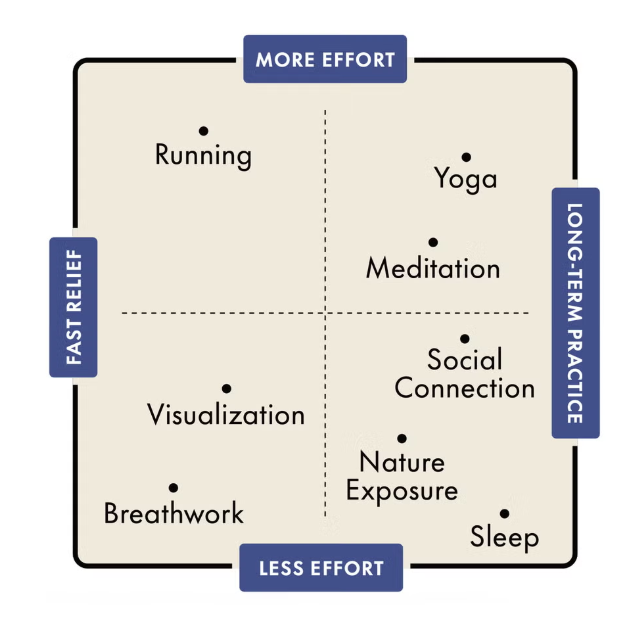
Some stress relievers work in minutes, while others build resilience over time. The most effective routines combine quick resets, like breathwork, with longer-term habits like sleep and regular social connection.
Use Our Matrix to Plan Your Stress Reduction Strategy:
One Runner’s Wake-Up Call
Geneva Humdy started running in her early 20s to stay fit and never really stopped. By her 30s, she was logging about 35km a week, though occasionally after long runs she’d wake up in the middle of the night with her heart racing, gasping for air. The cardiologists she saw couldn’t find anything wrong.
Years later, while hiking in Costa Rica at age 66, Humdy felt something similar, but worse. On the way down the trail, she suddenly struggled to breathe and sensed her heart beating irregularly. When she checked her blood pressure that evening, the reading was dangerously high.
Back home, doctors finally identified the cause: a congenital heart defect that had gone undetected for decades. Humdy underwent two ablation procedures to correct the abnormal electrical signals in her heart. With her cardiologist’s guidance, she slowly built her mileage back. In 2024, she celebrated her 70th birthday by completing the Ku‘ikahi Half Marathon in Hawaii.
Her experience underscores an important message cardiologists emphasise: Unexplained symptoms shouldn’t be ignored, and finding the right specialist can make all the difference in safely returning to running.
When to See a Cardiologist
- You have a genetic or family history of issues. A cardiologist can assess your risk of having a heart event.
- You’re symptomatic or have noticed even a subtle decline in your performance that you can’t explain with nutrition, hydration, electrolytes, overtraining, or undertraining.
- You have cardiac disease and want exercise recommendations and/or a second opinion.
- You’re worried about your heart. “You’re jacking up your sympathetic nervous system, and your heart rate is going to go up – so it’s better to get things checked out,” Singh says.
This article first appeared on the Runner’s World USA website.
READ MORE ON: heart health heart healthy superfoods max heart rate resting heart rate