
Hip or Knee Pain? This Overlooked Muscle Could Be the Culprit
Learn the causes and symptoms of sartorius pain, plus the best exercises and stretches to ease the ache.


When hip and knee pain strike, many runners suspect their iliotibial band (ITB) is the cause. While that’s true in some cases, there may be another muscle at play: the sartorius muscle.
The sartorius is unique. Not only is it the longest muscle in the body, but it also crosses two joints (the hip and knee), Christopher Hicks, MD, a sports medicine physician with Northwestern Medicine Group, tells Runner’s World. That makes it highly active during most phases of your run stride, and therefore at risk of pain and cramping.
We break down what you need to know to run ache-free, including the best at-home treatment options.
While the sartorius muscle flexes the hip and the knee and externally rotates the hip, it isn’t the primary mover in any of these actions, explains John Vasudevan, MD, co-director of the Penn Medicine Running and Endurance Sports Programme and Runner’s World advisory board member. “The sartorius is an important ‘back-up’ muscle that assists other muscles in their actions,” he explains. “When any of the primary mover muscles either get tight (for example, iliopsoas) or fatigue (for example, gluteus medius), the sartorius muscle takes on more load than it can sustain over time, leading to cumulative use strain.”
Hicks agrees, saying the sartorius muscle also isn’t a strong hip or knee flexor compared to the larger, more powerful muscles nearby. “However, given the innate function of the sartorius muscle, it is highly active and can be overused,” he says.
Pain at the front of the hip and along the quadriceps may indicate that tightness in larger hip flexor muscles is straining the sartorius. “Your sartorius is going to work harder if your hip flexors are tight,” Lauren Simon, MD, a sports medicine physician, tells Runner’s World. When the other hip flexor muscles can’t lengthen enough to facilitate your running stride, your sartorius has to contribute more than it’s used to, leading to tightness and pain.
Overstriding is another common cause of sartorius pain. “The sartorius goes hip-to-knee, so if you overstride, you can yank on it, which can make it hurt,” Simon says. Too much sprinting can annoy the sartorius for the same reason, she adds.
How to Know If Your Sartorius Muscle Is Causing Pain
For some, sartorius pain can be felt as a sore, burning sensation along the front inside portion of the knee. This may mean you’ve irritated the pes anserine bursa, which is a small, fluid-filled sac that cushions the tissues near the knee joint. The pes anserine bursa is located beneath the insertion point of the sartorius and two other muscles: the gracilis (a muscle of the inner thigh) and the semitendinosus (a hamstring muscle).
If these three muscles are tight, they put excess pressure on the bursa, affecting how well it can reduce friction when muscle and tendon glide over bone, per the International Sports Sciences Association.
Pes anserine bursitis pain stands out from other causes because you typically feel that burning pain at rest or when you first start moving, but then it can improve with gentle movement, Vasudevan adds. It can also hurt more when lifting the leg, like when stepping up into your car.
Some runners complain of cramping in the sartorius, though it may not be a muscle cramp in the traditional sense. “Typically, a true muscle cramp is a muscle that’s actively contracting painfully during exercise,” Jacqueline Palmer, PT, DPT, PhD, an assistant professor in physical therapy, tells Runner’s World. Muscle cramps often happen in the heat or if you overexert for an extended period.
When it comes to the sartorius, the cramping may feel more like painful tightness at any point along the muscle. “It feels like a hot rubber band when you’re running, and if you keep pushing through, you feel more of a crampy pain,” Simon says.
Treatment for Sartorius Muscle Pain
Addressing muscle tightness and strength imbalances is the first step toward fixing sartorius muscle pain and cramps.
If the pain is chronic, a physical therapist or run coach can check your form, because simple tweaks can take some strain off your sartorius and resolve pain. “Are you internally rotating your hips when you run? Are you overstriding? They can assess your form and help you fix your biomechanics,” Simon says.
However, you might be able to make some fixes on your own. The goal: Stretch the muscles on the front of the body and strengthen those on the back of the body. Here are the moves to try.
Stretch the Sartorius and Other Hip Flexors
As mentioned earlier, the sartorius works closely with other muscles to flex the hips. Stretching all the hip flexors, including the sartorius, can relieve tightness, helping every muscle do its part.
“The sartorius is actually challenging to truly target and stretch because it crosses two joints, so you have to think about the positioning of both the hip and knee,” Palmer says. Luckily, most hip flexor stretches will hit the sartorius to some extent.
90/90 Stretch
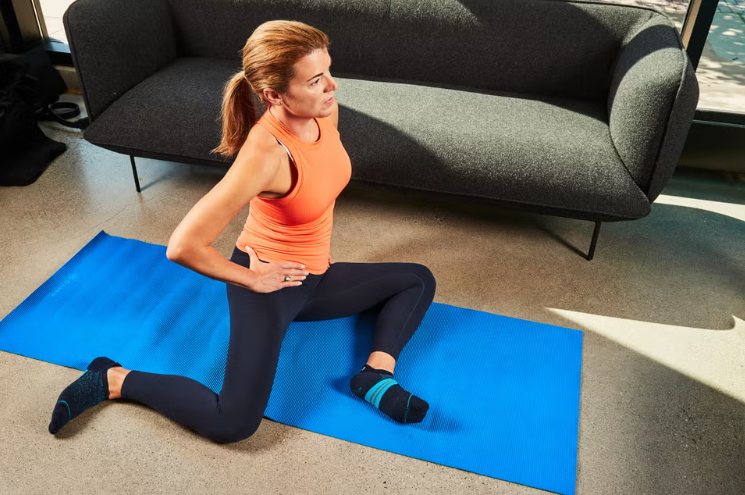
Why it works: William Kelley, DPT, CSCS, recommends doing the 90/90 hip stretch, which hits internal and external hip rotation. Because it’s a static stretch, do this after every run when you’re warmed up.
How to do it:
- Start seated. Place left shin on ground in front of torso and right shin to the side, with knee in line with hip, both knees bent 90 degrees.
- Lean forward over left shin until there is a deep stretch in right hip and glutes.
- Press left leg into the ground to activate the hips and glutes. Hold for 20 seconds.
- Repeat on the opposite leg. Do 3 sets.
High Lunge
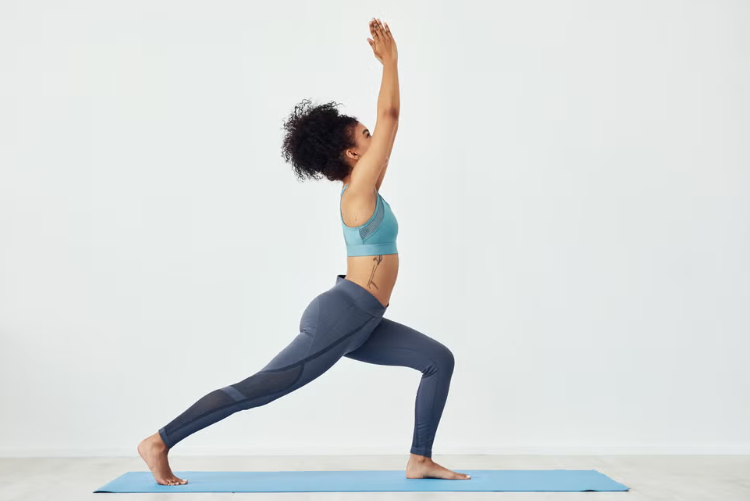
Why it works: For a more straightforward hip stretch, you can also try a high lunge, which stretches the hip flexors of the back leg.
How to do it:
- Stand with feet together, abdominals engaged, shoulders away from ears, hands by sides or in prayer pose in front of chest.
- Take a big step back with left foot, landing on the ball of the foot and keeping leg straight.
- While doing this, bend right knee so upper thigh is parallel to floor, shin perpendicular.
- Point the front of both hips forward and squeeze legs toward each other before reaching arms overhead.
- Hold for at least 30 seconds.
- Repeat on the other side.
Strengthen Opposing and Supporting Muscle Groups
Tight hip flexors often signal weak hip extensors (muscles that straighten the hips). “One of the strategies that I often use with people with hip flexor overuse injuries is strengthening the glutes and hamstrings,” Palmer says. Incorporate exercises that target the glutes and hamstrings, such as glute bridges and deadlifts, into a full-body strength routine three times per week.
Glute Bridge
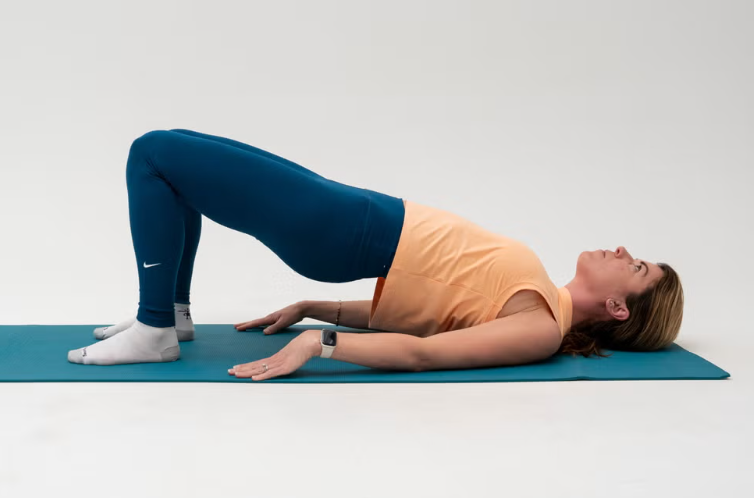
Why it works: This beginner-friendly move works those muscles of the posterior chain (the glutes and hamstrings).
How to do it:
- Lie face up, knees bent, and feet planted on the floor.
- Drive through heels, contracting the glutes to lift hips up toward the ceiling. The body should form a straight line from shoulders to knees.
- Lower hips down slowly.
- Repeat. Do 12 reps.
Deadlift
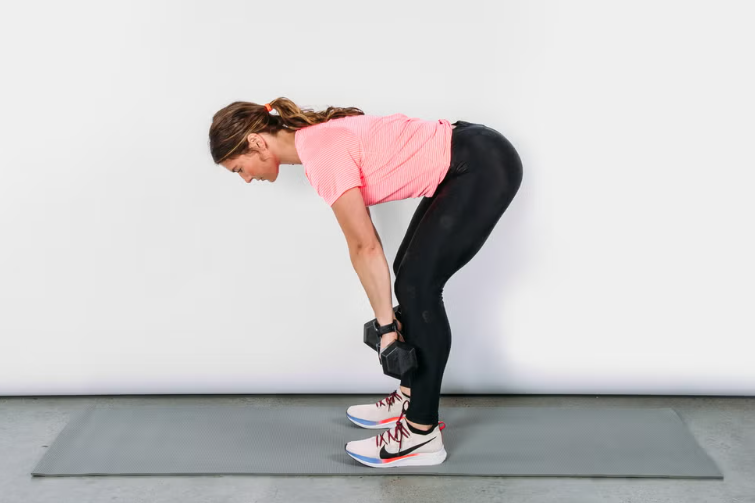
Why it works: This move is one of the best for strengthening the glutes and hamstrings.
How to do it:
- Stand with feet hip-width apart, slight bend in knees. Hold a dumbbell in each hand down in front of thighs. Pull shoulders down and back.
- Hinge at hips by sending glutes straight back. Keep back flat and core engaged.
- Drive through feet to stand back up, extending hips.
- Repeat. Do 12 reps.
Fire Hydrant
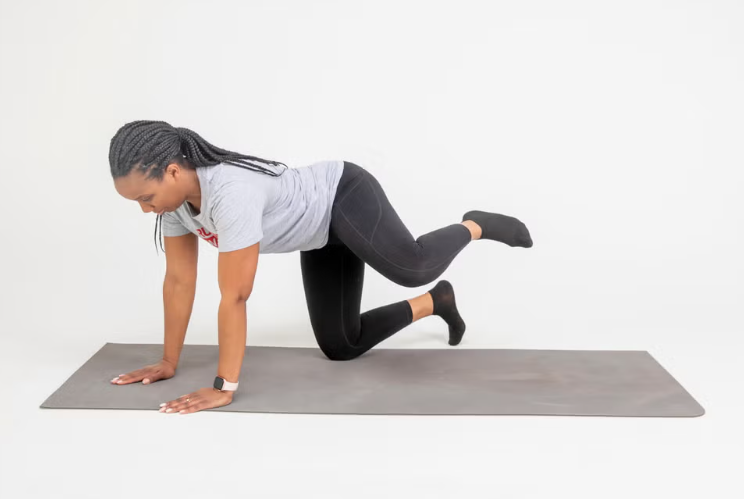
Why it works: Just because your sartorius is tight doesn’t mean it’s strong. To strengthen the sartorius itself, Palmer recommends the fire hydrant exercise.
How to do it:
- Get on all fours with wrists under shoulders and knees under hips.
- Keep left knee on the floor and lift right leg out to the side, knee bent 90 degrees. Lift as high as possible without dropping the opposite hip. Keep hips square to the floor.
- Lower right knee back down.
- Repeat for reps.
- Then switch sides. Do 3 sets of 6 to 10 reps.
How Long It Takes to See Results
The length of your recovery depends on the issue with your sartorius and how quickly you address it. Generally, the sooner you tackle your sartorius muscle pain, the less time it takes to recover.
If the pain and soreness stem from tightness, you may feel a change within one to four weeks, depending on how consistent you are with your rehab routine, Hicks says. Muscle strains typically take longer to heal—about four to six weeks to notice improvement. The key is being consistent with your exercises and stretches.
Severe pain, swelling, loss of function, and popping or ripping sensations are indicators to stop running and visit a sports physician for help. But in general—though you may need to cut down on volume—you should be able to train through your rehab, as long as the pain isn’t too severe, Vasudevan says.
This article first appeared on the Runner’s World USA website.
READ MORE ON: hip-pain injuries knee-pain sartorius muscle