
Seven Moves Doctors Recommend for Plantar Fasciitis
Foot stretches and exercises can help relieve this painful condition and keep you running.

If you start to feel an ache in your foot as you increase your mileage or, more acutely, when you take your first steps in the morning, it might be time to check in with your plantar fascia.
…it’s one of the top five most common injuries runners face…
“The plantar fascia is a band of connective tissue on the bottom of your foot that runs from your heels to the base of your toes,” Adefemi Betiku, a physical therapist tells Runner’s World. “It supports your foot during weight-bearing activities and helps propel you forward while you’re running. And if you overdo it or have weakness in other areas of your body, it can become inflamed.”
While not only runners can get plantar fasciitis, when that band becomes inflamed, it’s one of the top five most common injuries runners face, according to a systematic review on musculoskeletal injuries in the sport.
Signs of Plantar Fasciitis
The “-itis” in plantar fasciitis refers to the inflammation, and some recent research suggests “it’s actually a degenerative-tissue injury, and that’s why it’s often chronic,” Hamish Vickerman, an Australian physiotherapist who developed the Fasciitis Fighter line of products, explains to Runner’s World.
Sometimes called fasciopathy or plantar heel pain, it’s excruciatingly painful with a telltale, shooting pain along the sole of your foot from the heel to the arch.
“In mild cases, the pain may improve or ‘warm up’ during activity but then become sore afterwards, similar to an irritated tendon,” says Vickerman. He notes that the ache is often also worst during your first few steps in the morning, because the fascia becomes tight as you sleep.
Common Causes & Treatment
Several things can contribute to plantar fasciitis foot pain. “An episode of plantar fasciitis can be triggered by a new or seasoned runner increasing their volume, speed, or intensity too quickly,” says Vickerman. “We often see training errors, such as sudden spikes or increases in training loads. When that happens, it’s likely the tissue can’t manage the demands, and we see failure at a cellular level.”
In addition to ramping up volume or intensity, it could also mean not taking enough recovery time between runs.
Unsupportive or worn-out running shoes could also be the culprit, so it might help to buy a new pair or get orthotics (approved by your physical therapist) to slip into your shoes and give your arches some extra cushion.
Another sneaky cause could be an ache in a seemingly unrelated body part, says Betiku, who always checks a person’s back and hips when they visit him with pain in their plantar fascia. Hamstring tightness, as well as glute weakness, can increase your risk of the injury.
If possible, taking a couple of weeks off from running to give your feet some rest and recovery is ideal, says Betiku. But if you have an upcoming race and really don’t want to, taking days off isn’t always crucial. However, you should still cut your mileage in half for a couple of weeks at least. Night splints or specialised socks can also help to relieve pain for those who feel it most in the morning. And, of course, if you’re in a lot of pain, consult a physical therapist.
While you cut back, add the moves below to your sessions to help loosen up the tightness and strengthen all the surrounding, supportive muscles at once. You can also perform these moves as a preventative measure, so you don’t get plantar fasciitis or to avoid getting it again. The key is doing them consistently for at least four to six weeks, especially the stretches which require daily practice to see the benefits.
In addition to these moves, it’s also smart to add some myofascial release to your routine: Roll your foot on a lacrosse or tennis ball, or over a frozen water bottle, which will help to reduce inflammation.
Seven Key Exercises for Plantar Fasciitis
1. Calf and Soleus Stretch
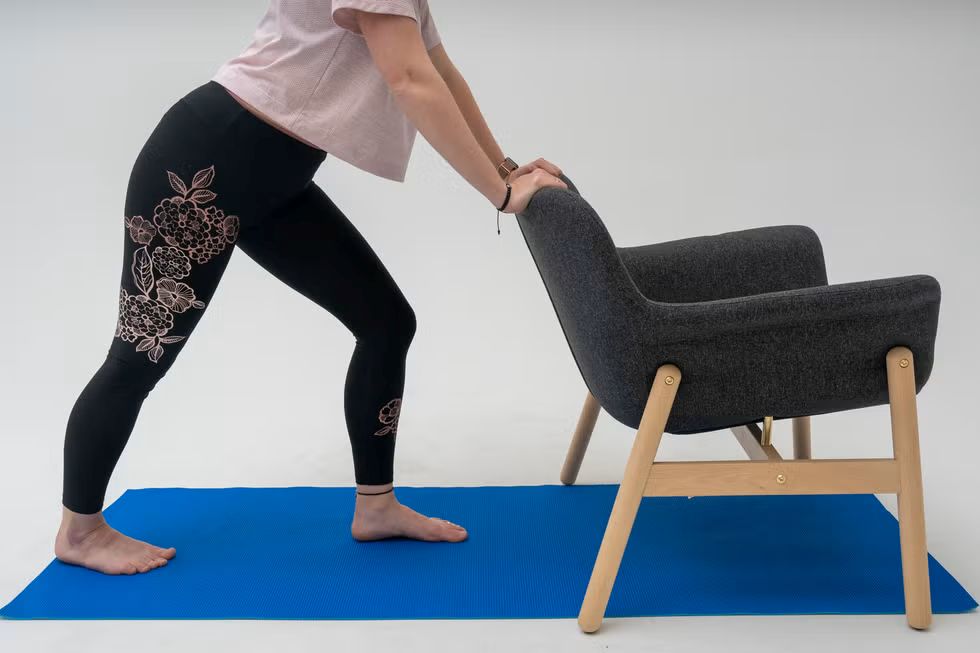
Why it works: This stretch for your calves can help ease the stress they’re adding to your plantar fascia. Make sure to do both versions of the stretch to target both sections of your calves: the upper gastrocnemius and the lower soleus, advises Betiku.
How to do them:
- Stand about arm’s length from a wall or chair with both palms flat against it.
- Step right foot back.
- Lean into the wall to feel a deep stretch in the calf. Hold for 15-30 seconds.
- Then bend the right leg until you feel the stretch in the lower down calf. Hold for 15-30 seconds.
- Repeat both stretches on the opposite side. Do 3 sets of each.
2. Toe Stretch
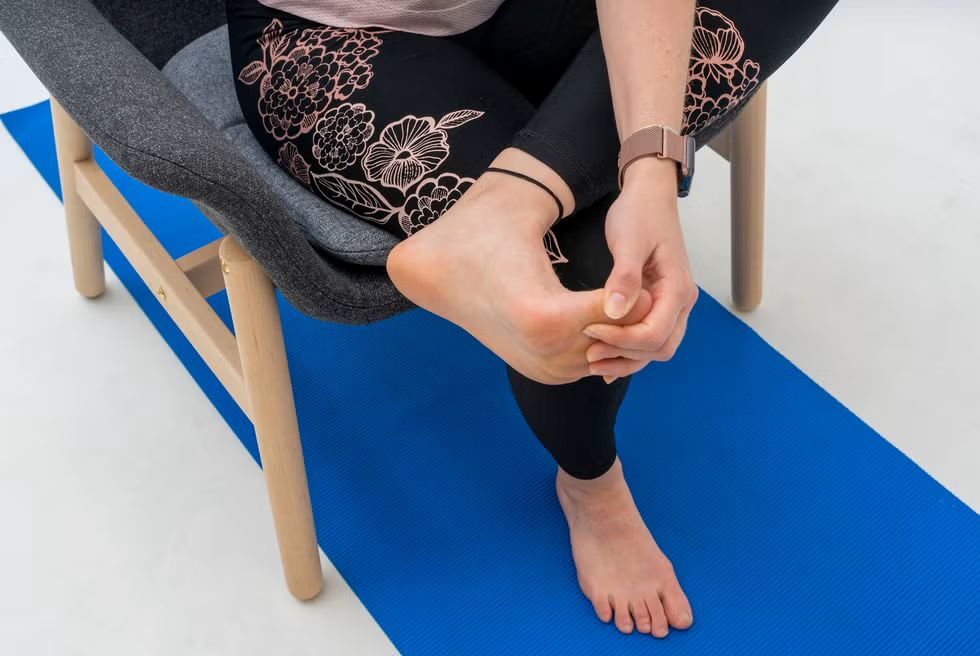
Why it works: This plantar fasciitis stretch may seem counterintuitive, but “stretching the plantar fascia has been demonstrated to be a successful technique in the treatment of plantar fasciitis, with particular emphasis on mobilising the big toe,” says Vickerman.
How to do it:
- Seated, cross right foot over left knee.
- Grasp toes with right hand and pull back, focusing the most on big toe, until you feel a stretch along your arch.
- Hold for 15-30 seconds.
- Then repeat on the opposite side. Do 3 sets.
3. Toe Lift
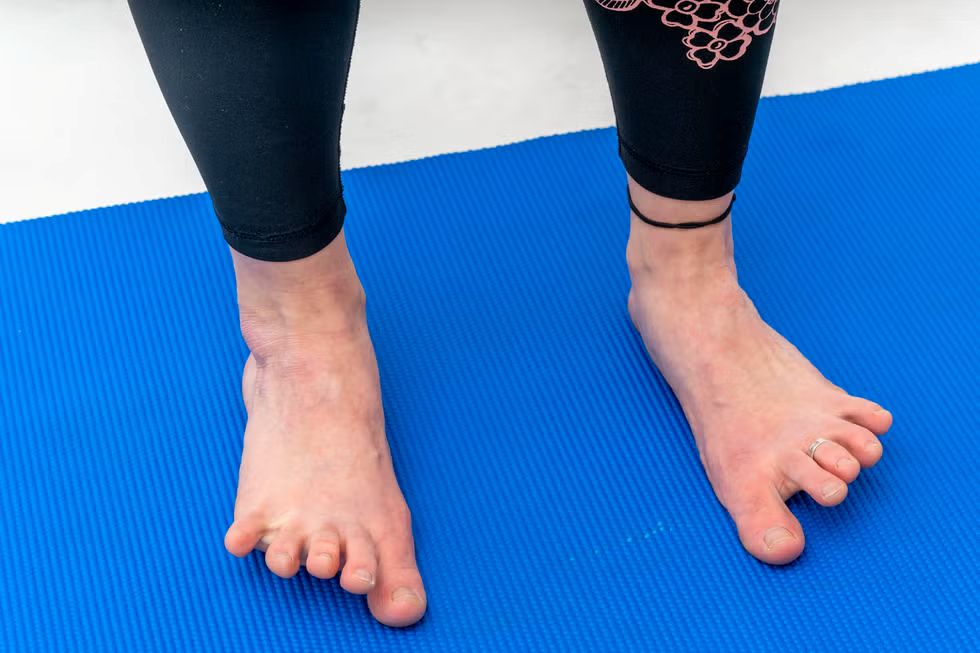
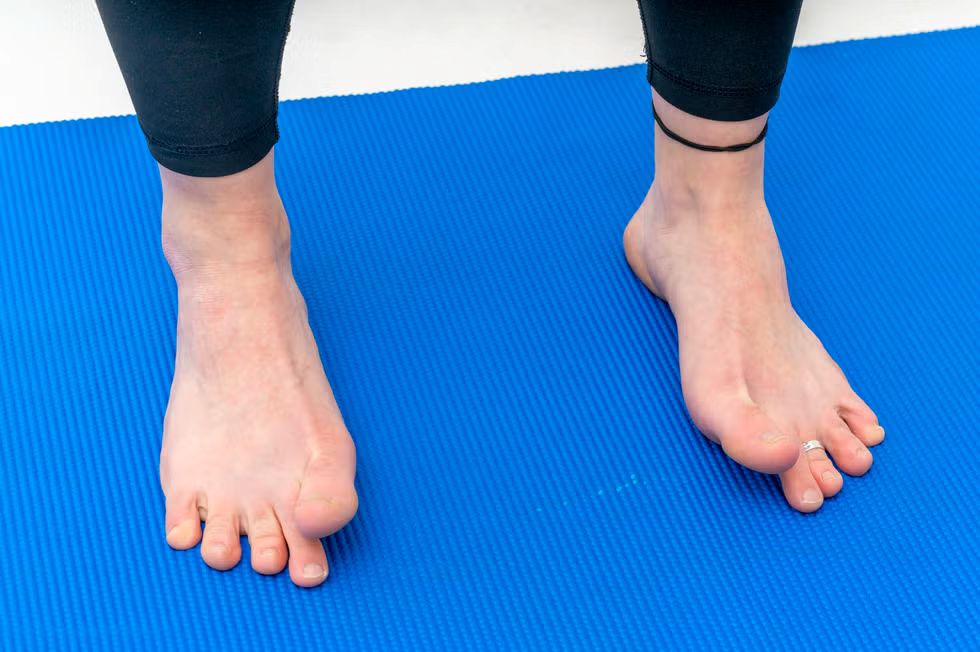
Why it works: “Isolated toe lifts help strengthen the muscles that run along the arch of the foot and support the plantar fascia region,” says Vickerman. You will likely feel some relief from the pain as you do this exercise.
How to do it:
- Stand or sit with bare feet flat on the floor.
- Keeping four smaller toes pressed into the floor, lift the big toe.
- Pause, then lower slowly.
- Repeat. Do 10 reps.
- Then, keeping the big toe pressed into the floor, lift your four smaller toes.
- Pause, then lower slowly.
- Repeat. Do 10 reps.
4. Towel Scrunch
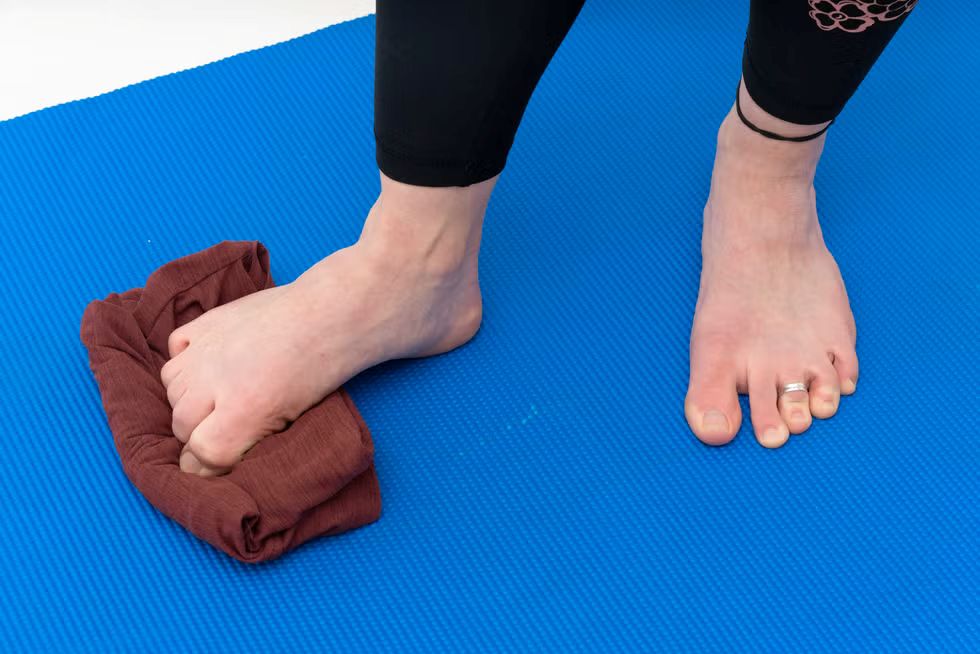
Why it works: “This move works the tiny, intrinsic muscles in your foot, which help support the arch and surrounding area while you run,” says Betiku.
How to do it:
- Place a towel flat on the floor and put your right foot flat on an edge of it.
- Flex your toes toward you repeatedly to scrunch the towel back toward your foot as much as possible.
- Repeat with the left foot.
5. Heel Raise
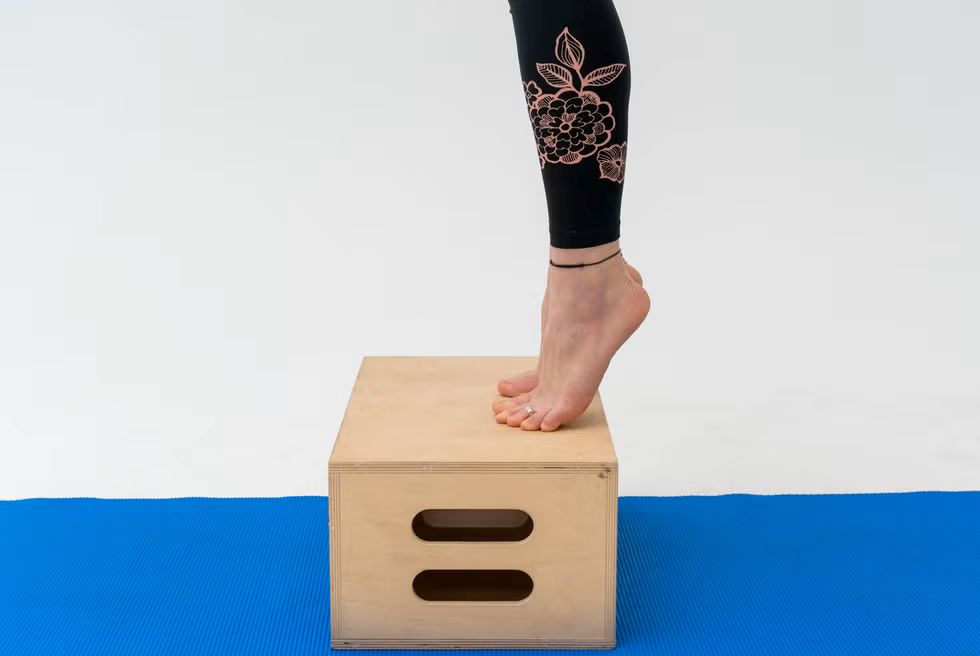
Why it works: The strengthening power of this move is amped up when you do it on a step, with the plantar fascia taut at the start of the exercise. “First do the move with both feet in unison, then progress to one leg at a time,” says Betiku. You’ll target the tibialis posterior muscle, in particular, which dynamically supports the arch of your foot.
How to do it:
- Stand with the ball of each foot on the edge of a step, with heels hanging off it so the foot is flexed.
- Engage calves and lift heels.
- Pause, then slowly lower back down.
- Repeat. Do 10 reps.
6. Clamshell
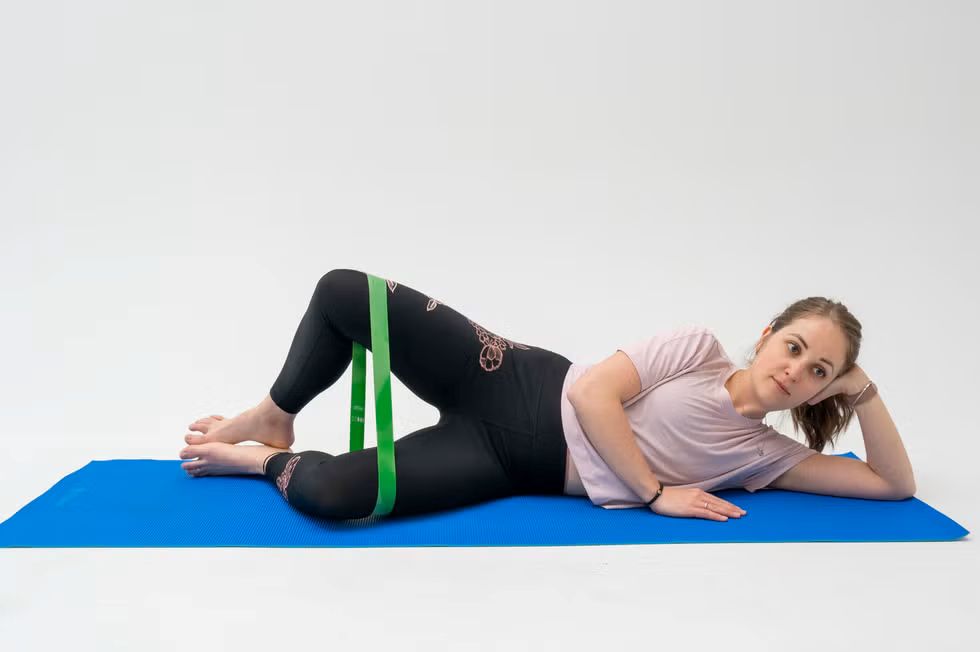
Why it works: Plantar fasciitis can stem from weak hips, Betiku says. This move is a solid go-to for strengthening the hips.
How to do it:
- Lie on the right side, resistance band around the thighs, just above the knees. Rest your head on your right arm. Stack shoulders, hips, and knees, with hips and knees bent about 45 degrees.
- Engage glutes and externally rotate the left hip, lifting the left knee. Keep feet together.
- Pause. Then lower back down.
- Repeat. Do 10 reps.
- Then switch sides.
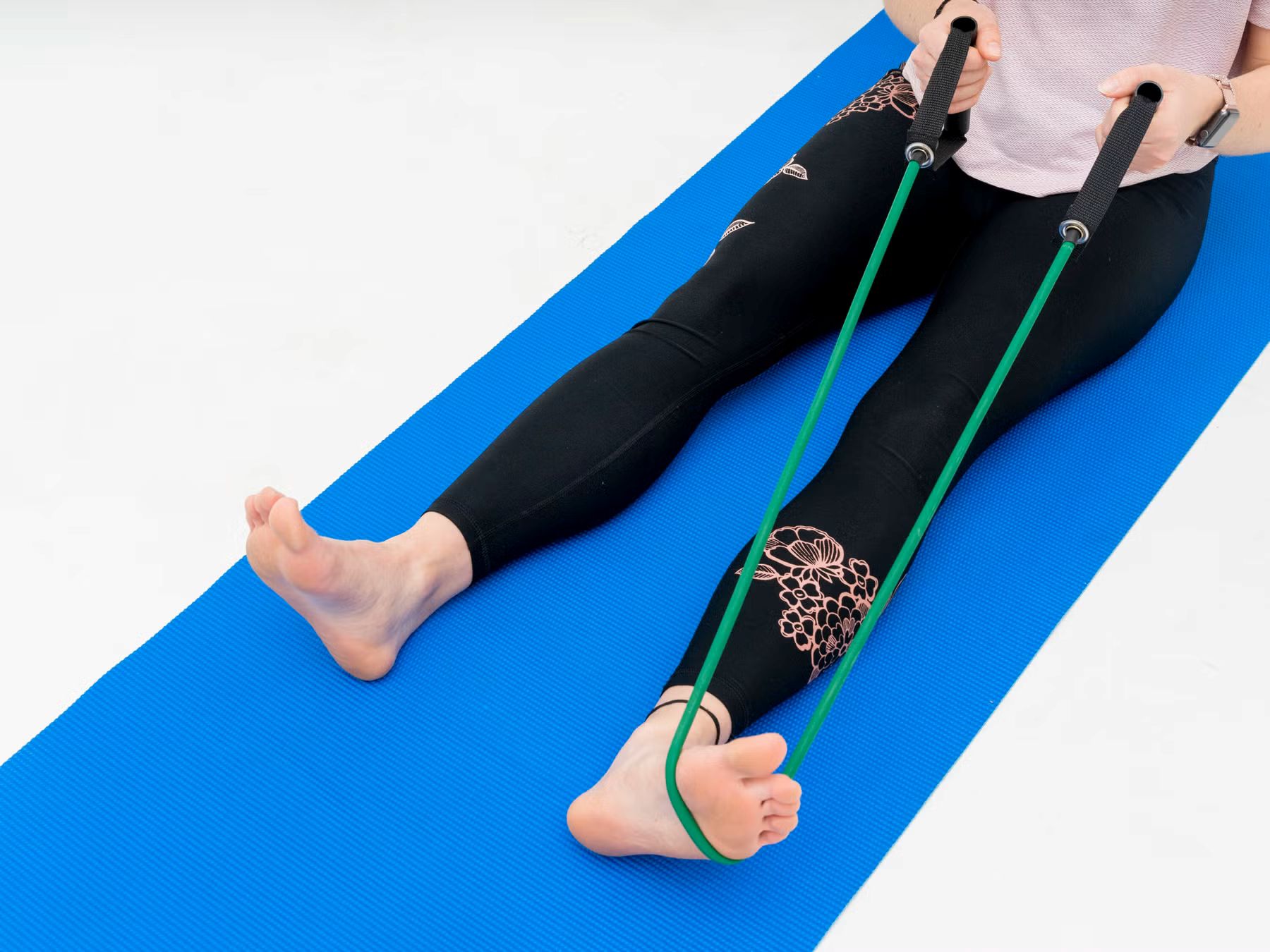
7. Four-Way Foot Flex
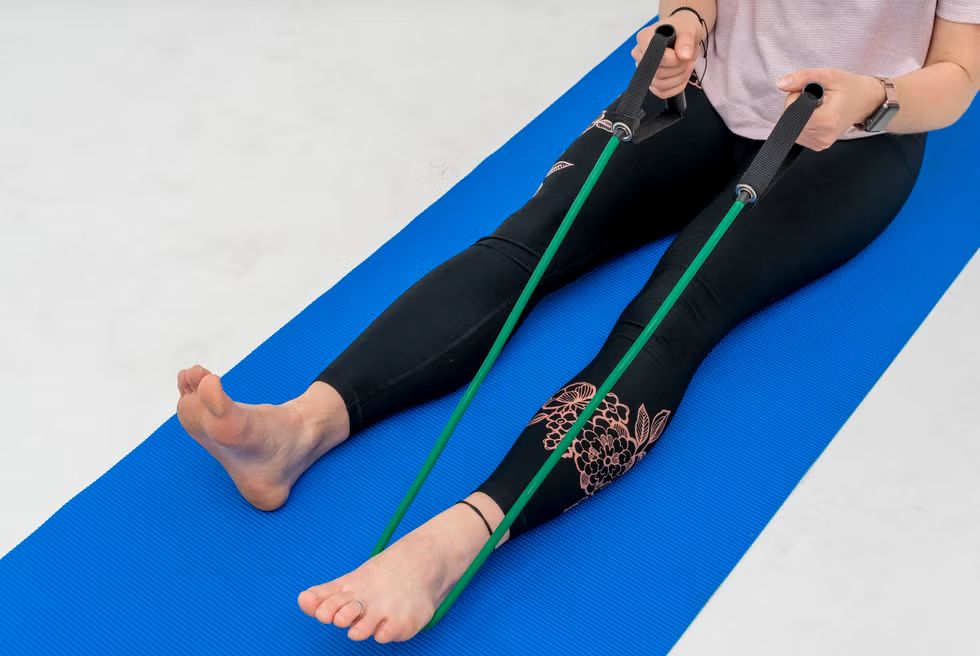
Why it works: This exercise strengthens the muscles of the foot, but also those of the lower leg that attach to the ankle and help support your feet as you run, Betiku says.
How to do it:
- Start seated on the floor, legs straight.
- Loop a long resistance band around the left foot, and hold it in both hands.
- Pull toes toward you.
- Pause. Then return to neutral, toes over ankle.
- Next, point toes against the resistance band (shown left).
- Pause. Then return to neutral.
- Drive foot to the left (shown right).
- Pause. Then return to the centre.
- Drive foot to the right.
- Pause. Then return to the centre. That’s one rep. Do 10 reps.
- Then switch sides
READ MORE ON: foot pain Plantar fasciitis running injuries sore feet