44 and Not Done Yet!
Ryan Sandes makes his case for one more start line…

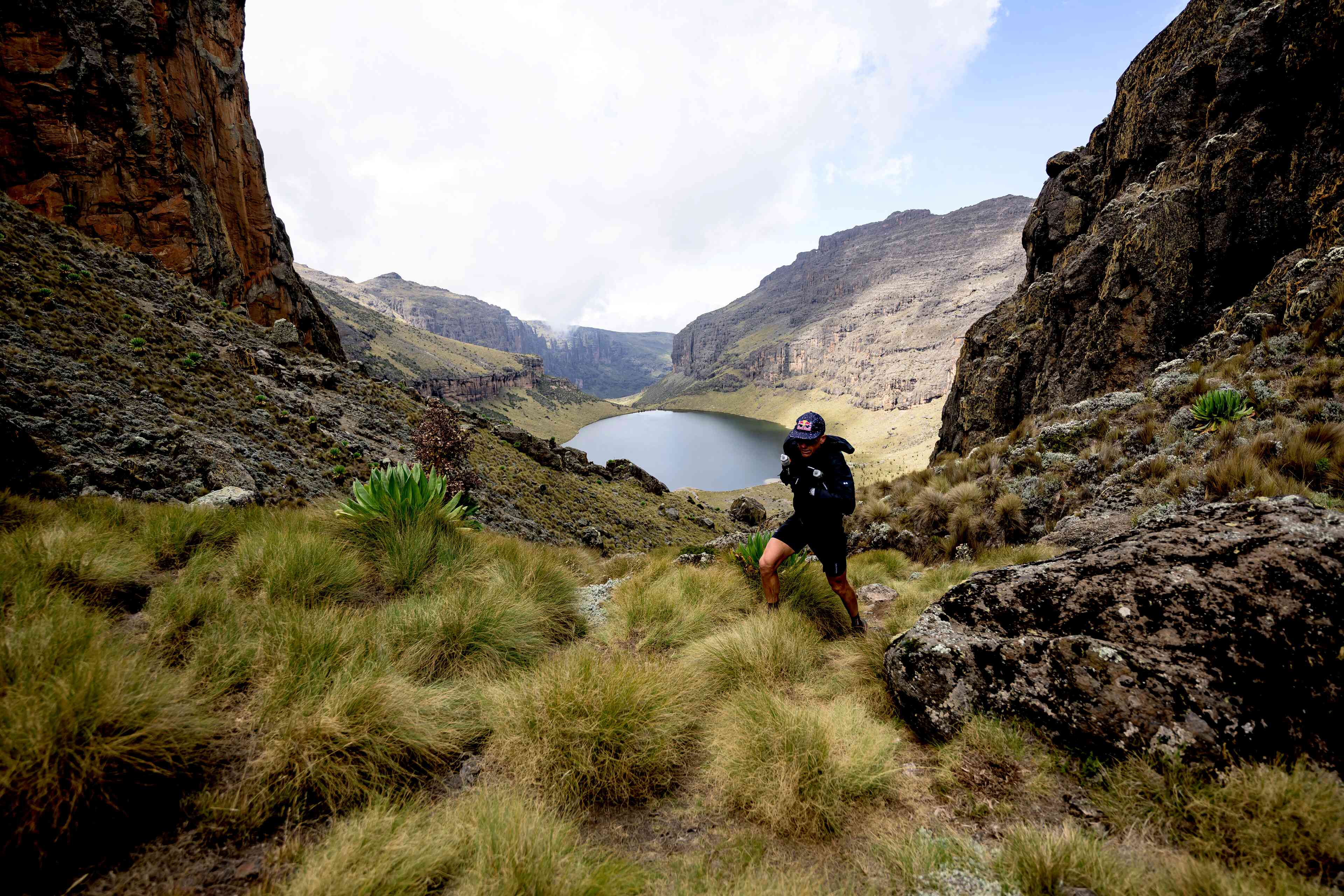
It’s gone three in the morning, somewhere on the flanks of Mount Kenya, and Ryan Sandes cannot sleep.
Not from excitement; from the cold, mostly, because the sleeping mat he packed was never quite thick enough for a mountain this indifferent to one’s gear list, and the altitude has settled into a low, insistent thump behind his eyes. He’s shivering, inside a bag rated for kinder conditions than this.
And somewhere in that half-conscious, half-delirious state between exhaustion and full awakening, the questions start doing laps. What was I thinking? Why am I out here, at 44 years old, freezing? On the equator?!
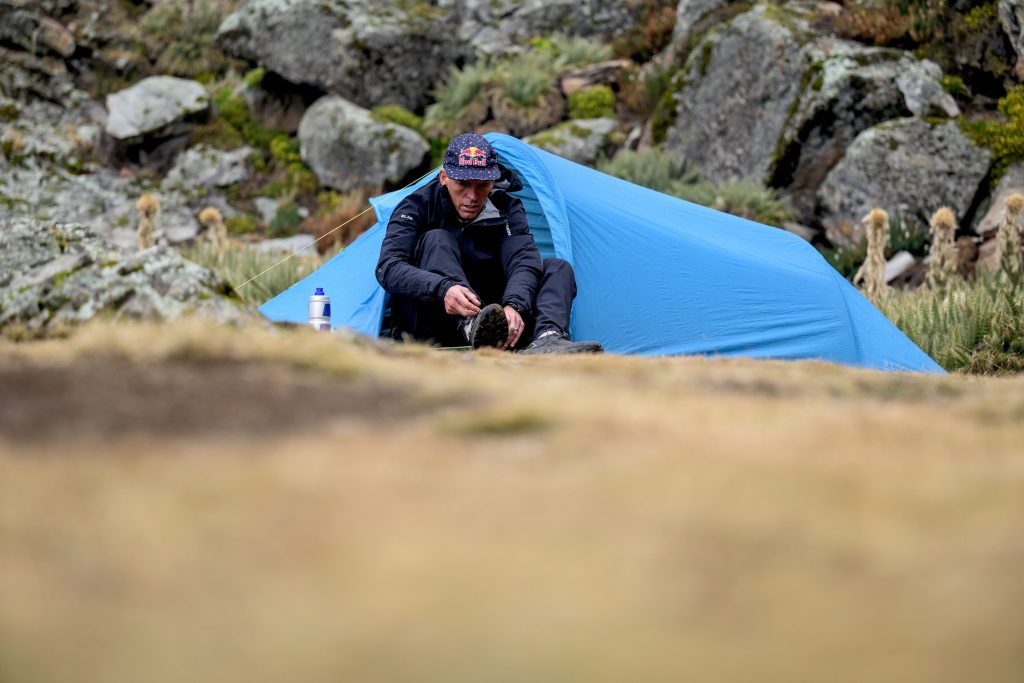
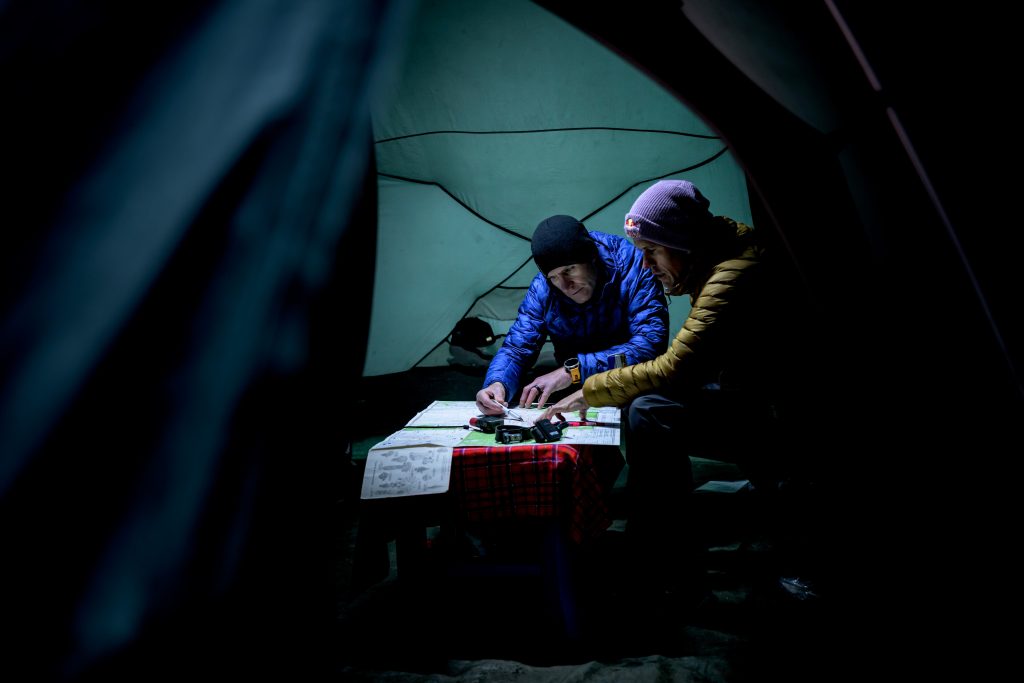
It’s not, on the face of it, a great advert for the incisive judgement of a forty-something professional athlete. Sandes and long-time running partner Ryno Griesel were deep into a Kenyan expedition that would see them summit Point Lenana five times in seven days, covering 188.5km, with just under 12 500m of elevation gain along the way. Ask Sandes about that particular night now, weeks removed and warm again, and he doesn’t describe it as ‘miserable’ so much as… ‘necessary’.
“You’re so removed from the comforts of everyday life, so vulnerable,” he says. “But also so alive. It gives you that space to really think. To dream.”
That’s the trade Sandes has been making for the better part of two decades now: comfort for clarity, certainty for something closer to the edge of himself.
It’s how a Cape Town quantity surveyor turned into the first man to win all four 4 Deserts races, the first to win an ultra on all seven continents, and one half of the pair that still holds the fastest known time across the Great Himalaya Trail. It’s how a man who has now run close to 75 000km in racing and training – the better part of twice around the Earth – ends up lying awake on a mountainside, dreaming his way towards a start line he hasn’t even qualified for yet.
A kid at Newlands
At some point, in that tent, half asleep and hurting, Sandes drifted somewhere unexpected. Back to being a boy at Newlands in 1995, watching the Springboks run out for the opening game of the Rugby World Cup; dreaming, the way every South African kid of that era did, of pulling on the green and gold himself one day.
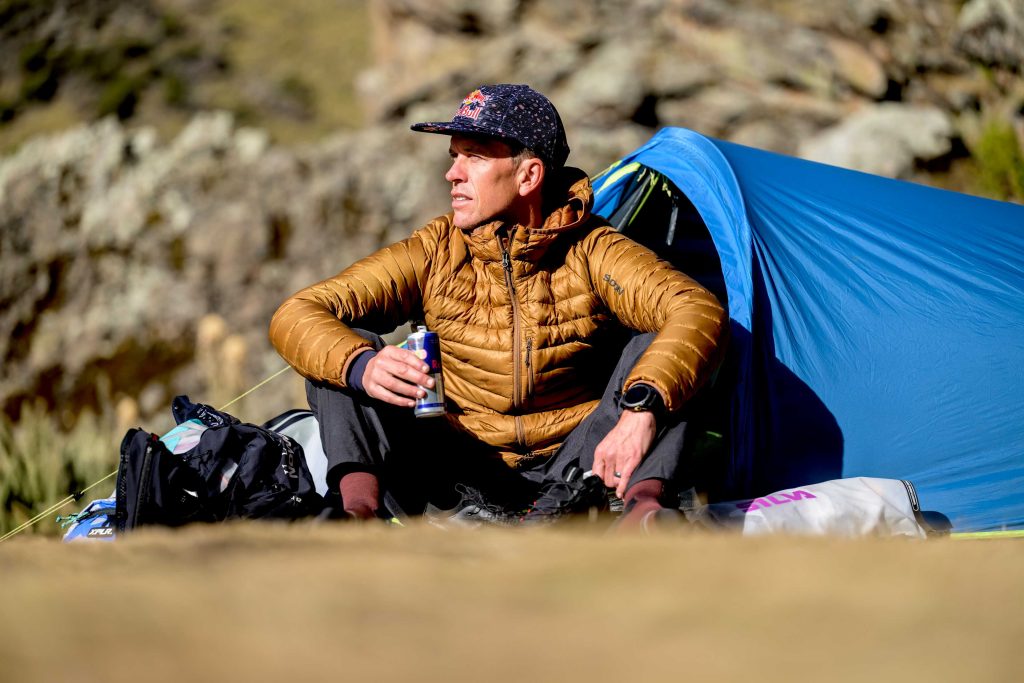
“I’m probably not going to be the next Siya Kolisi,” he laughs, well aware of what the response to that tends to be for a 44-year-old trail runner. “But I do have an incredible opportunity to put on the green and gold and represent my country at the Trail World Champs. On my home trails.”
The 2027 World Mountain and Trail Running Championships will be held in Cape Town, the first time the event has ever been staged on African soil, and close enough to Sandes’ own doorstep that parts of the course will probably cross ground he already trains on. It also happens to fall in what would be his 20th year competing professionally. The symmetry isn’t lost on him.
“It just seems like a really incredible opportunity,” he says. “In the early days, the Trail World Champs were never that prestigious. But in the last two editions, it’s grown a lot more in stature.”
The honest bit
Here’s where it gets complicated, and where Sandes, to his credit, doesn’t dress anything up.
He hasn’t qualified. He doesn’t yet know exactly what qualifying will take, or which race will end up being the one that decides it. And the event itself, the ultra distance he’d be aiming for, sits somewhere between 75 and 80km – a sprint, by his standards, for a man who spent last year grinding through the 400km Cocodona 250 across Arizona.
“The critics or naysayers could say it doesn’t make the most sense for me, for where I am in my career,” he admits. Racing men half his age over a distance shorter than what he’s built for, at a pace that isn’t exactly his wheelhouse anymore, isn’t the obvious late-career move for someone best known for surviving deserts and mountain ranges over multiple days rather than hours.
He’s heard some version of the question before: are you too old? Are you fast enough anymore? His answer hasn’t changed much in twenty years, even if the numbers on the calendar have.
“I feel like if I train smart, focus on the right things, use my experience… honestly, I can get into the best shape of my life. A better, faster athlete than I was 10 or 15 years ago.”
Subsequent to this article being written, Ryan has qualified for the SA Team and the World Trail Champs after placing 9th overall and 2nd South African home in the Ultra-trail Cape Town 100km held on 21 November.
What Kenya actually taught him
It would tie things up neatly to say that the Mount Kenya experience was engineered specifically to spark all this. It wasn’t.
The trip was its own project, its own set of lessons about patience, planning and respecting terrain that doesn’t much care about your itinerary. But somewhere in the doing of it, something else clicked into place.
“It’s something I’d been thinking about before Mount Kenya,” Sandes says. “But it was out there, in the mountains, that everything just solidified. I just realised: this is what I want to do.”
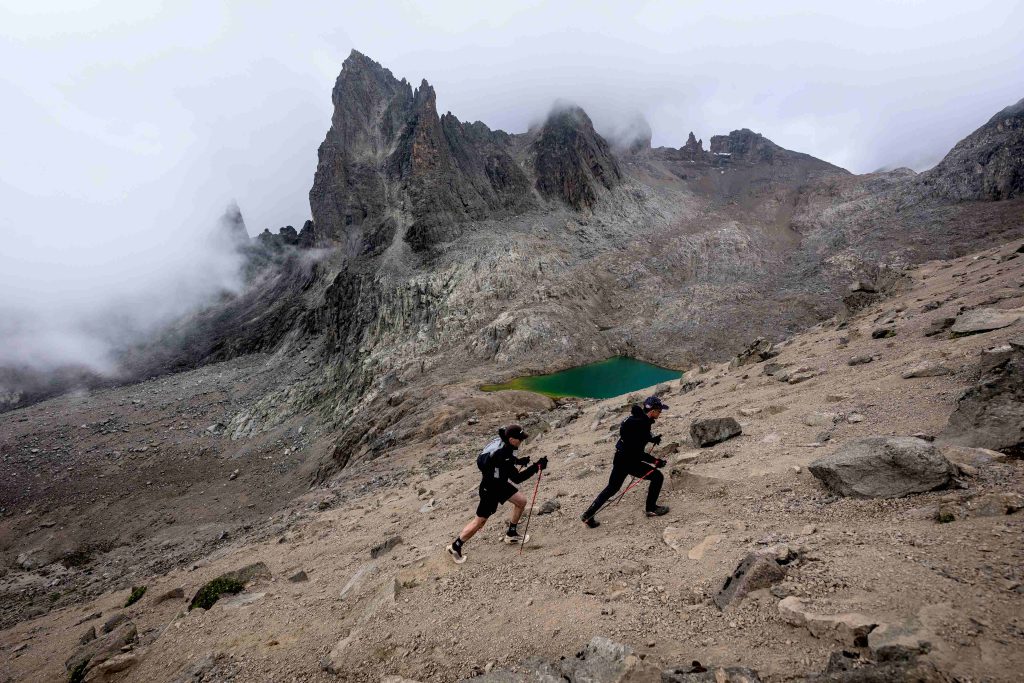
He’s since gone back through his own list of lessons from the trip – the ones about staying mentally hungry, breaking a big goal into manageable pieces, training smart rather than just hard – and found that almost every one applies as neatly to a Trail World Champs qualifying campaign as it did to a Kenyan mountainside.
Breaking down the goal means accepting that the dream is Worlds, but the actual job in front of him right now is getting faster, getting stronger, and working out what qualifying even requires. Accepting an imperfect build-up means making peace with the fact that if this race were happening on home soil a decade or 15 years earlier, in his prime, it would suit him rather better than it does at 44 going on 45.
And not panicking when things go sideways – a lesson learned somewhere above 4 000m, with a dull headache and an inadequate sleeping bag – is exactly the discipline he’ll need through a qualifying season built on uncertainty rather than a guaranteed outcome.
“There are so many lessons from Mount Kenya I can draw on,” he says. “Even if I fail, that’s a success, because at least I tried. If I don’t try… that’s the failure.”
Rather fail hopelessly
It’s a philosophy that’s carried him through two decades of chasing goals that other people would call unreasonable, and it’s the same one steering him now. Ask Sandes why he’s doing this – why a man with nothing left to prove in ultrarunning would sign up to get outrun by athletes half his age, over a distance that was never his speciality – and the answer isn’t really about medals at all.
“I’d rather fail hopelessly trying something that excites me than not try at all,” he says. There’s a version of this conversation where that line sounds like a platitude. Coming from someone who’s spent 20 years choosing the harder, less certain path on purpose, it doesn’t.
There’s also a common misconception he’s keen to correct: that adventure and competitive racing sit on opposite ends of an athlete’s career, that once you start chasing FKTs and expeditions, the racing ambition quietly fades. For Sandes, it’s worked the other way entirely.
“People think when you start doing adventures, that’s when you move away from trying to be competitive,” he says. “For me, it’s the opposite. Adventure is what gives me the freedom, the space, to find the next goal in terms of racing that really excites me.”
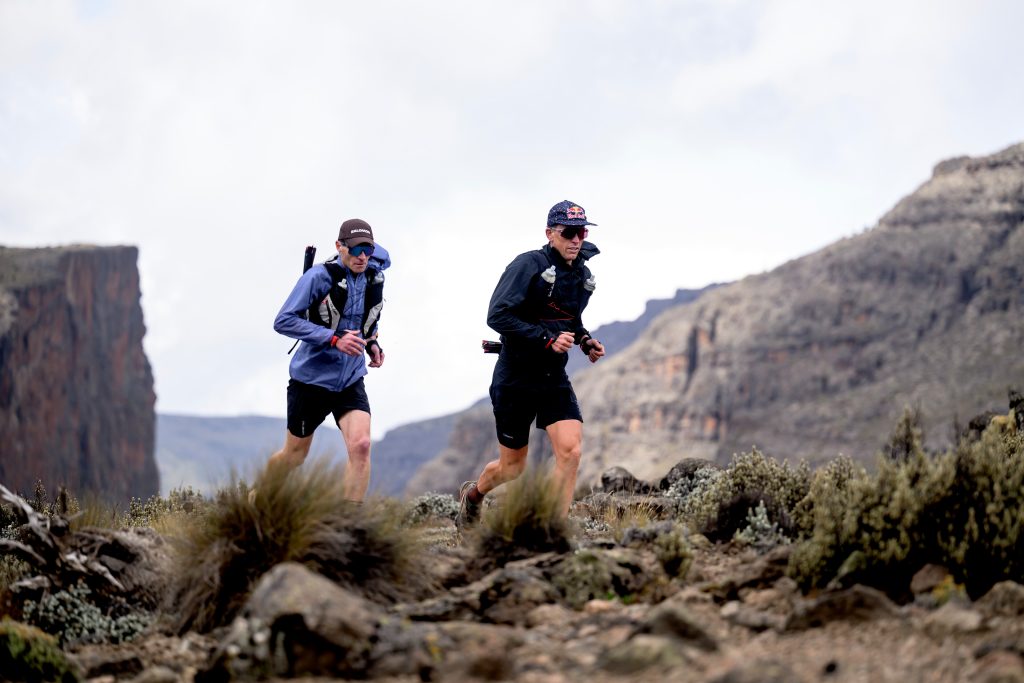
So here’s the plan, such as it is: get faster over shorter distances than he’s used to, work out exactly what selection demands, and find out whether a body that’s already run nearly twice around the Earth’s circumference has one more green-and-gold start line left in it. There’s no guarantee attached to any of this, and Sandes isn’t pretending otherwise.
But somewhere back on that freezing mountainside, shivering through a night that should have been miserable, the boy from Newlands got his lights switched back on. Whatever happens between now and October 2027, on trails Sandes could probably run half in his sleep, that much has changed already.
This article is featured in the November/December issue of Runner’s World – on sale now.
READ MORE ON: mount kenya ryan-sandes trail-running