
30 Years of the People, Mountains and Spirit Behind the Legendary SkyRun

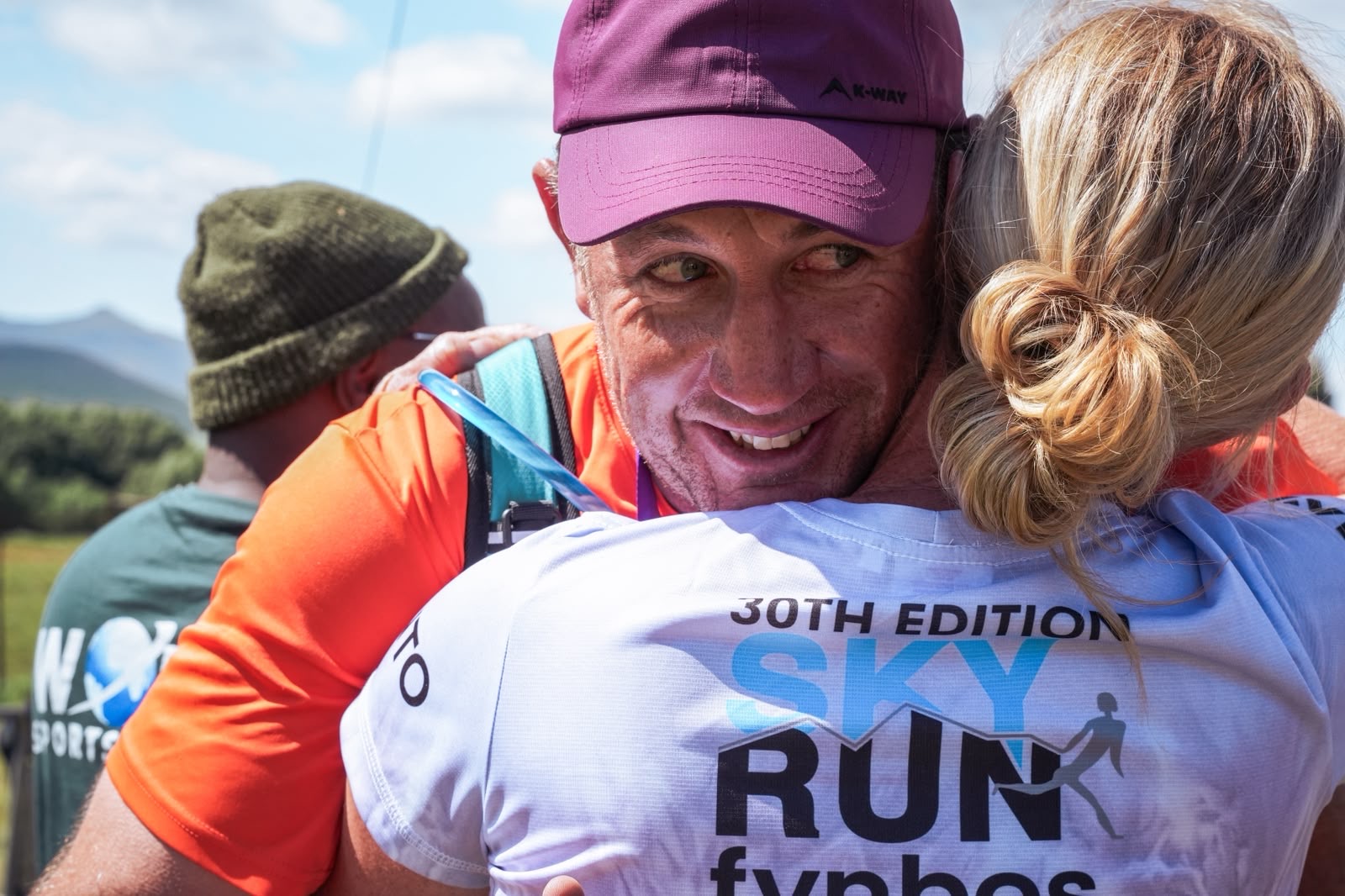
As SkyRun Presented by Fynbos Money celebrated its 30th running this weekend, Jess Barrow claimed a long-awaited victory in the women’s 100km race, while Marc Bernades Ollé took top podium in the men’s event.
But beyond the podiums and finishing times, it was the hundreds of runners who took on one of South Africa’s toughest mountain adventures who reaffirmed that the true spirit of SkyRun lies in its people, its community and the extraordinary bonds forged on the mountain.
At midnight on Friday, 13 November, the small town of Lady Grey turned red once again for the start of the 30th SkyRun sending athletes out into the remote Witteberg mountains.
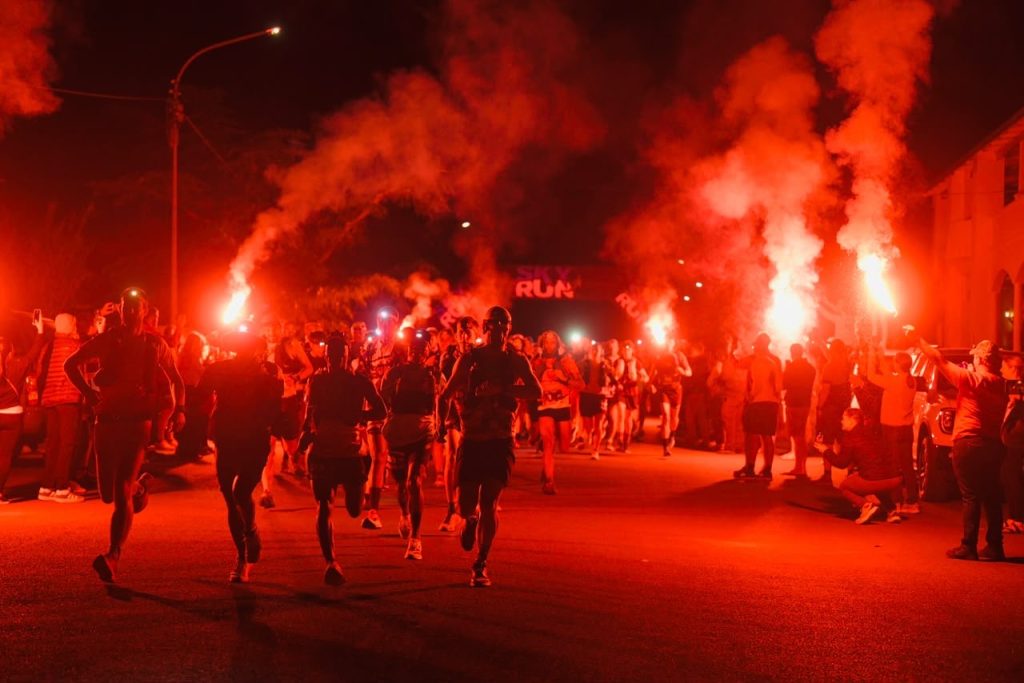
There was no sunrise to welcome them, no familiar daylight to help them find their way. Instead, they faced hours of darkness, freezing mountain temperatures, challenging navigation and the prospect of spending two nights and an entire day making their way across some of South Africa’s most remote mountain terrain.
It was an unusual start to an unusual edition of SkyRun. But then, the 30th running of South Africa’s original mountain race was never going to be quite like any other.
With serious thunderstorms and lightning predicted for the area on Saturday, race organisers made the decision to bring forward the starts of the 100km and 65km distances to midnight on Friday, rather than the traditional early Saturday morning start. The 38km runners would follow at 10am on Saturday.
Safety was the priority. The previous year’s event had been called off because of dangerous weather conditions, and organisers were determined to give this year’s athletes the best possible opportunity to complete their journeys safely.
At the race safety briefing, Race Director Adrian Saffy even explained the position runners should adopt if caught in a lightning storm on the mountain, before adding that then they should pray. It was a light-hearted moment, but one that captured the very real unpredictability of taking on an adventure like SkyRun.
The changed start times brought their own challenges. Running into the darkness from the very first kilometre proved difficult, with good rains having left sections of the mountain overgrown, making navigation and finding usable paths considerably harder. The weather remained changeable, and the cold caught some runners off guard, with headlamp batteries struggling and athletes experiencing difficulties staying adequately hydrated.
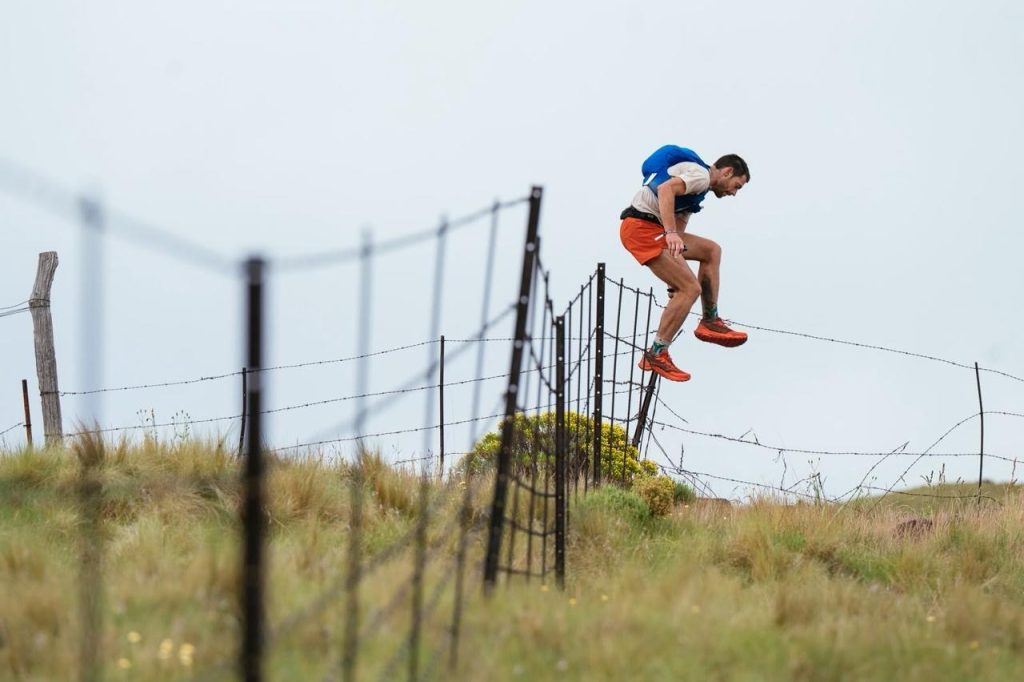
SkyRun has always been about more than covering 100km as quickly as possible. It is a self-supported, self-navigated mountain adventure, taking runners through the magnificent and often unforgiving Witteberg range, from Lady Grey towards Wartrail. There are no crowds lining the route, no easy access to assistance and no guarantee that the path ahead will be straightforward. Runners must rely on their own preparation, judgement and determination, often navigating for hours without seeing another competitor.
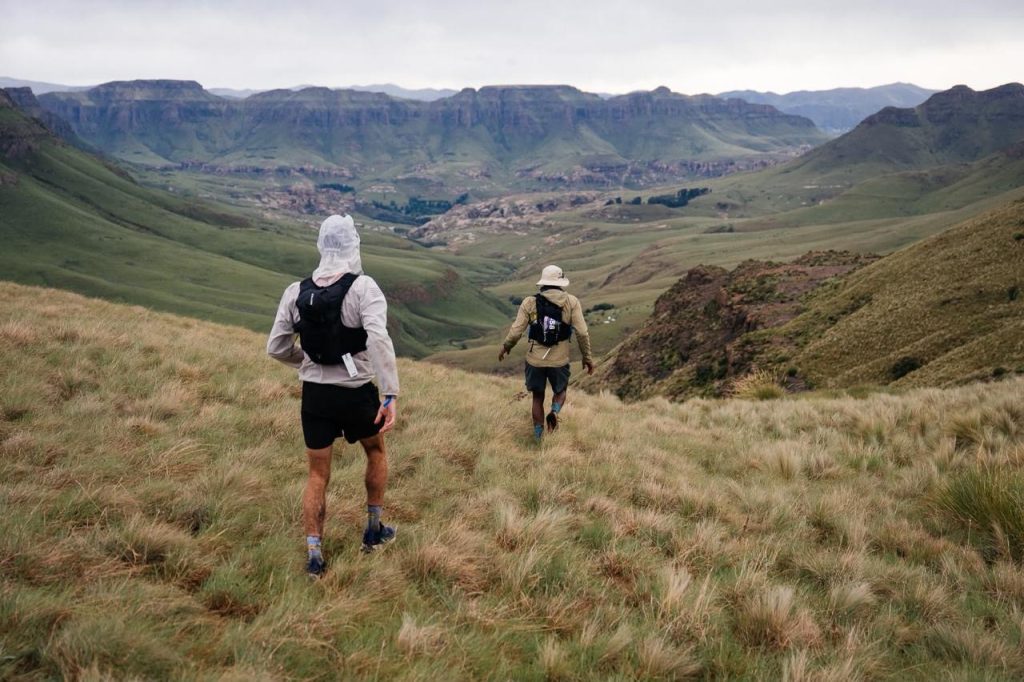
It is precisely this combination of isolation, challenge and extraordinary natural beauty that keeps people coming back. For Tracy Zunkle, who has returned to SkyRun over the years, the privilege of experiencing this landscape is a significant part of its appeal. “It is honestly one of the most untouched, pristine places that you can run, and we are given the privilege by the landowners to run on land and places that not very many people get to see. And just the people – the vibe, and the humility of everyone that is from this area, and who partakes. It’s just real people,” she said.
That connection to the landscape and the people who call the area home is fundamental to SkyRun’s identity. The race is limited to 500 participants each year, a deliberate decision that reflects the organisers’ commitment to minimising the impact on the mountain while keeping the event manageable from a safety perspective.
This is not a race designed to accommodate unlimited numbers. It is an event that depends on respecting the environment and the communities whose land makes it possible.
The farmers and landowners who open their properties to runners, the local teams who man checkpoints, the volunteers who monitor athletes along the route and the medical personnel who provide assistance are all integral to the experience. Without their generosity, commitment and willingness to welcome hundreds of people onto their land, there would be no SkyRun.
And then there are the runners themselves. This year’s event saw 118 finishers in the 100km, 99 in the 65km and 119 in the 38km. While the leading athletes were home in impressive times, the larger story was unfolding over many more hours, as runners dug deep to get themselves and their fellow competitors safely off the mountain.
For many, the greatest achievement was simply reaching the finish line.
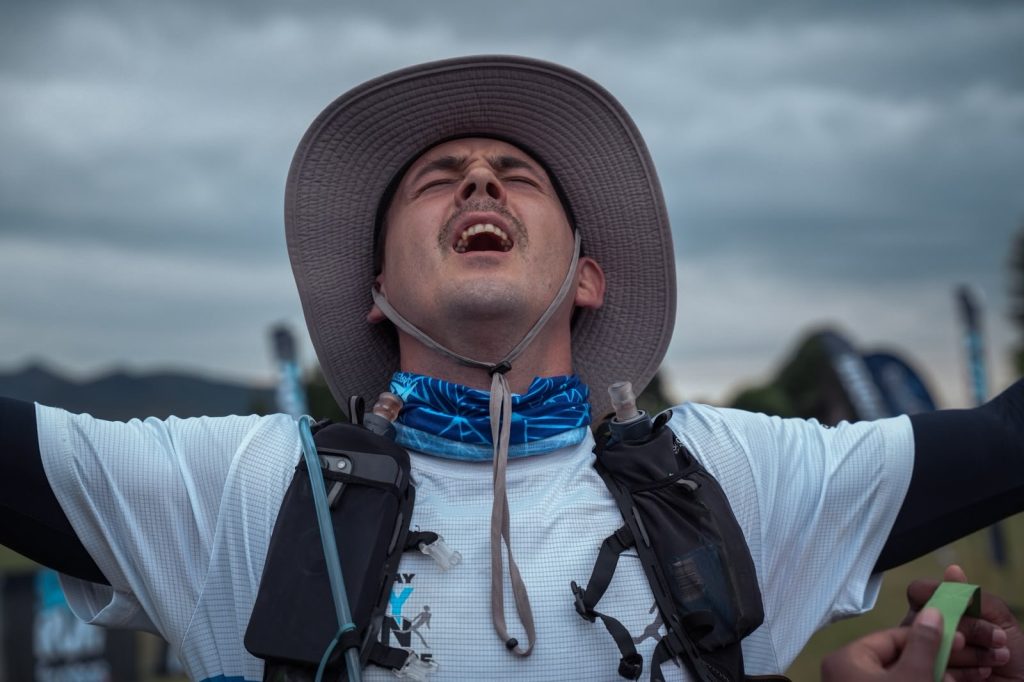
Regan Turnbull completed the 100km in 28:10:57 and described the experience as a series of extraordinary moments, including catching the sunset as it disappeared behind the Wall. “It was quite an experience. The views are breathtaking. A good day out – DAYS out! I only had two sense of humour failures, which I think is not a bad outcome for 28 hours,” he said.
Bertus Mouton finished in 29:14:55 and was initially worried about the early start, but welcomed the opportunity to experience two nights on the mountain. The reality of the freezing conditions, however, was something else. His headlamp batteries nearly gave up, making an already demanding journey even more challenging. His advice to future participants? Bring enough warm clothing. “I met so many nice guys, made so many new mates, so thank you. It’s a lovely event. And YES! I will be back,” he said.
The 100km leading men, Marc Bernades Ollé and Mjongile Tonic Masilo, ran neck and neck together for approximately 60km and ultimately crossed the finish line together, with Marc taking the lead position after Tonic received an unfortunate 10minute time penalty for not marking his name down at a checkpoint.
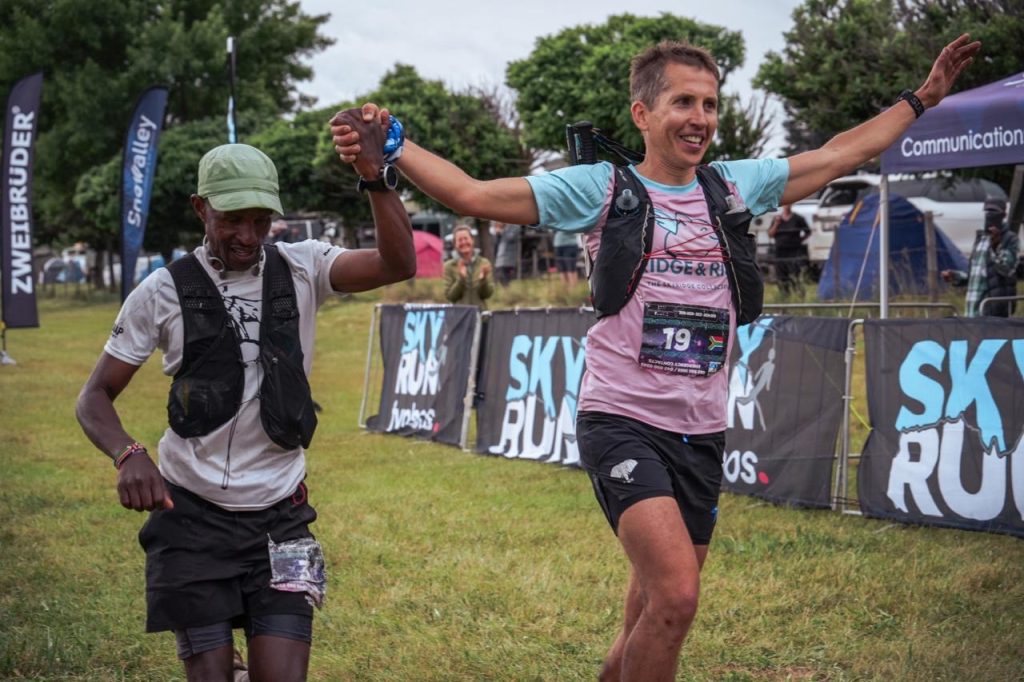
For first-timer Marc, the experience was among the toughest adventures he had ever undertaken.“It’s my first time here, and the navigation in the dark was very hard, even the locals I was following were making lots of mistakes. It’s been a very good experience for my first time here, I hope it’s not the last.”
The women’s 100km winner, Jess Barrow, had a particularly special reason to celebrate. Her victory had been seven years in the making, making it even more meaningful to claim the win during the event’s 30th anniversary.
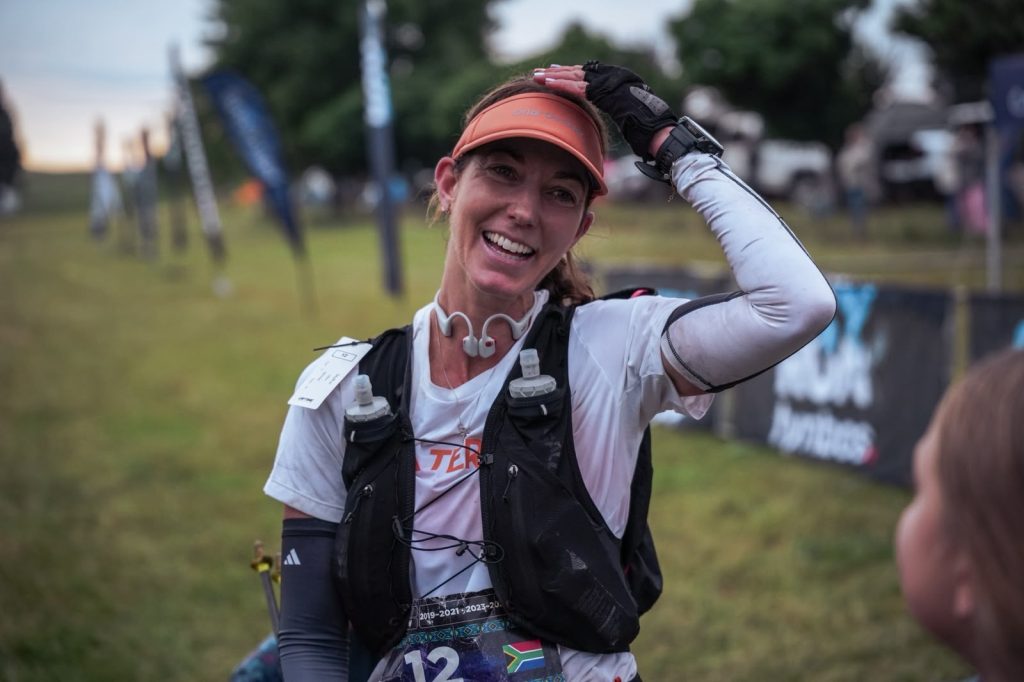
“This win is seven years in the making, so I’m thrilled, and to win on the 30th Anniversary – I couldn’t be happier. The day was hard, I found the midnight start really tough. It was very overgrown, it was wet and muddy, but I loved it nonetheless. This race is in my soul,” she said.
In the 100km women’s race, Jess Barrow claimed first place in 18:11:00, followed by debutant Marina Egorov in 20:17:20 and Shale Biggs, completing her third SkyRun, in 21:57:17. The men’s 100km saw Marc Bernades Ollé take 1st place in 14:36:38 and Mjongile Tonic Masilo 2nd place in 14:46:40, with Stewart Chaperon finishing third in 15:59:25. Chaperon’s return to the podium was particularly noteworthy, coming six years after his previous championship success and following significant health challenges.
In the 65km men’s race, local Rhodes runner Velaphi Mdona took 1st place in 8:46:18, ahead of Iain Peterkin in 9:59:37 and Chris Cragg in 10:47:45. Sarah Hearn won the women’s race in 12:12:38, with Maricel Cloete second in 12:22:44. Cloete’s result was another notable achievement, marking her fourth consecutive year at SkyRun. Katie Pillinger, competing as a debutante, finished third in 12:22:45.
The 38km men’s race saw Jack Davis and Rory Pelser share first place in 4:39:29, with Colin van den Bergh third in 5:19:50. Liza Du Toit claimed the women’s title in 5:28:01, narrowly ahead of Janneke Leask in 5:28:32, while Mira Rossouw finished third in 5:59:39.
A special mention must also go to 18-year-old Christiaan Hollander, who finished seventh overall and fifth among the men in the 38km, clocking 5:50:42. Having initially aimed for a top-ten finish, he was delighted with the result and already looking forward to returning.
For Race Director Adrian Saffy, the success of this year’s event ultimately comes down to one thing: getting everyone safely off the mountain. “SkyRun 2026 once again threw some curveballs, but the weather played along. While the temperatures made for perfect running weather, lots of athletes didn’t drink enough, so we had a few people who were nauseous and a bit delirious that were attended to by our skilled medics. But all in all, as long as everyone is safely off the mountain, it’s another successful SkyRun – 30 years strong, and there’s another 30 in us,” he said.
SkyRun is an event that has remained true to its roots, where the mountains are still the ultimate challenge, where the landowners still make the adventure possible, and where the runners continue to discover something about themselves and each other. The fastest athletes may set the records, but it is the hundreds of people who return, the first-timers who become lifelong fans, the friends who encourage one another to keep moving and the local community that welcomes them year after year who create the legend.
Thirty years on, SkyRun is not simply celebrating a race that has endured. It is celebrating a community that has grown around it – one that has helped make the extraordinary possible, and one that will carry the spirit of this remarkable mountain adventure into the next 30 years.
For all of the race results please visit www.skyrun.co.za
READ MORE ON: skyrun trail-running ultra running