
I Couldn’t Have Run My First Marathon Without These Four Tips
You Can Use Them for Any Race.

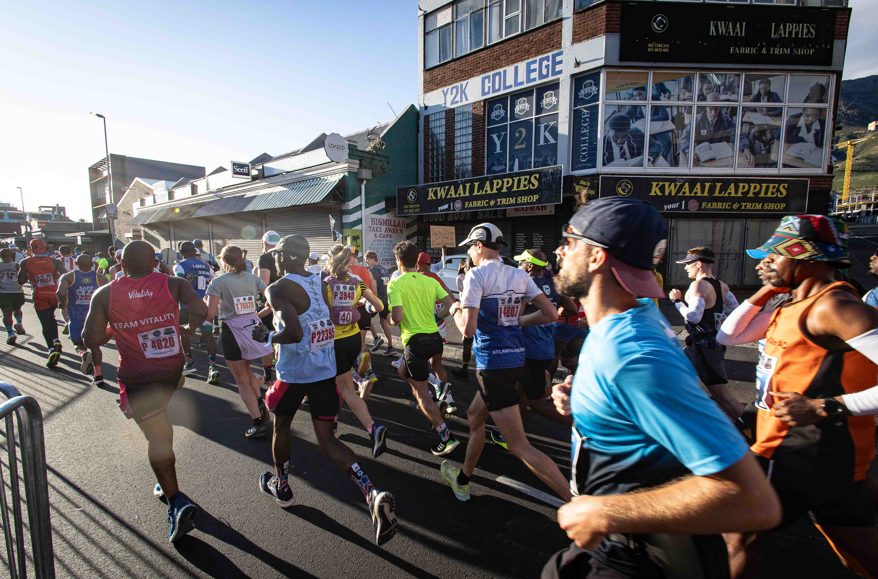
If you’re one of the 24 000 runners preparing for the 2025 Sanlam Cape Town Marathon on Sunday 19 October, it’s time to start thinking about your final race day plans.
Use these four tips to make the most of every kilometre…
A few simple strategies made my Boston Marathon race day unforgettable, and I will never run without them again. You can use these tips when taking on any marathon.
Maybe this is your first time taking on the journey. I was in your shoes last year, running my first Boston Marathon from Hopkinton to Boston and only the second marathon of my life. Heading into it, I wasn’t sure what to expect.
Would my race experience live up to the lofty expectations set by friends, fellow runners, and nonstop Google searches? After all, it’s Boston. Of course, I felt the pressure to make my race as epic as possible or else it might fall short.
Any doubts I had evaporated when I crossed the finish line on Boylston Street, as the Boston Marathon turned out to be everything I hoped for. And what made it even better were a few key decisions I made in the days leading up to race day that helped me tackle Boston with total confidence.
Here’s how you can do the same drawing on my experience and smart advice from running experts that give you all the tools for navigating your marathon. Use these four tips to make the most of every kilometre during your marathon.
Tip 1: Don’t Let Your Setbacks Derail You
It’s normal to face hiccups when you’re preparing to race 42.2km, says two-time Boston Marathon top-five finisher Nell Rojas in How to Master the Marathon. “Even for professional runners,” she says, “no training cycle goes perfectly. Take a deep breath – it’s ok.”
During my marathon training, I dealt with stubborn hip tendonitis about a month before race day, which made running nearly impossible for a few weeks. Instead of panicking, I turned to the elliptical. This low-impact training helped me keep my cardio fitness without further stressing my hip. Was it the ideal scenario heading into the marathon? No, but I stayed flexible, adjusted my training, and kept a positive mindset.
I also focused on consistent strength and resistance training once the hip pain kicked in. It’s important to incorporate mobility exercises for building strength, preventing injuries, and running your best marathon yet.
Tip 2: Know Your Route, Nail Your Run
While every marathon has its iconic elements, to truly prepare for race day, you’ll want to get to know your marathon route. Take some time to study the entire course. Get to know the downhills, sharp turns, and major climbs so you know exactly where to push the pace and when to hold back.
For me, closely reviewing the course map and even driving the full route with my dad a couple of days before the race made all the difference. Visualising the race helped me craft a solid plan. I knew that the first half would feel great as I cruised the downhills, but I also anticipated that the pain train would begin to hit once I made the hard right at the Newton Fire Station – a well-known landmark on the Boston Marathon route.
Tip 3: Focus on Your Fluids
For marathoners, hydration is non-negotiable – especially on warmer race days. If it is going to be a warm day, it is important to prioritise hydration. At nearly every water station, I took at least a few sips of water, and even poured many cups of water over my head to stay cool as the temperatures climbed.
Even if the forecast for your race looks cool, don’t let that fool you – hydrating consistently is critical to run your best race.
Rule of thumb: Aim for between 300 and 600ml per hour in normal conditions, but the ideal amount varies based on individual factors like sweat rate, temperature, and intensity. Being on top of your hydration can be as easy as grabbing a small sip at every water station.
In How to Master the Marathon, 2014 Boston winner Meb Keflezighi says you don’t want to get thirsty at the 30km mark, so plan ahead. “Just like pacing, you don’t want to hit the wall too early,” he says.
And don’t overlook your electrolytes, either. While I frequently took advantage of the electrolyte fluids provided along the course, you can also carry handheld bottles or a running hydration pack to keep your sodium levels up and your body balanced.
Tip 4: Relish Your Run, No Matter the Results
Whether or not you hit your time goal, crossing the finish line at the Boston Marathon is a huge accomplishment. You poured months of rigorous training into preparing for this moment. Race day in Boston is your chance to take pride in how far you’ve come.
That’s exactly how I approached my Boston debut. I wasn’t expecting it to be my fastest marathon ever, and I knew there’d be tough times along the way. But as I stood in the start corral in Hopkinton, I made a promise to myself: I wouldn’t let anything deter me from having a good time.
Adopting that mindset transformed my race. Instead of putting pressure on myself to chase a specific finish time or hit every benchmark, I focused on soaking up all the joy of the day.
In fact, some of my favourite memories of my marathon have little to do with running itself. I’ll never forget feeling the incredible support from strangers lining the entire route, or sharing the experience with my dad, who went all-in as my biggest supporter, driving to various points along the course and waving a spring-themed Garfield house flag in the air so I could spot him in the massive crowds (a tip I highly recommend for all spectators cheering on loved ones).
It’s these lasting memories that ultimately define your marathon experience for the rest of your life. While I didn’t run anywhere near a PB, I still remember race day as one of the happiest days of my life.
And when you’re fully recovered from your marathon journey, follow a race recovery plan to shake out those aches and pains. Before long, I’m sure you’ll start dreaming of making some more marathon memories.
READ MORE ON: cape-town-marathon marathon preparation marathon running