
Four Advantages of the Treadmill Over Outdoor Running
The treadmill isn’t just a backup plan.

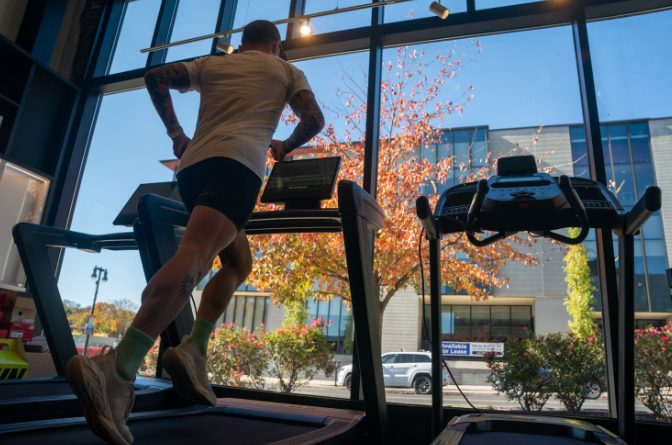
Navigating outdoor running during the cold winter months or humid, extremely warm summer months can be a tough ask for even the most dedicated runners. It’s at this moment, with no options left, that many runners reluctantly turn to the treadmill. The treadmill isn’t just a backup plan. It’s one of the smartest tools for building fitness, confidence, and consistency year-round.
…reframe your thinking on treadmill running…
It’s easy to see the treadmill as a last-resort option. However, when used intentionally, the treadmill can serve as a performance and injury-prevention asset that outdoor running alone can’t match. In this article, you’ll discover why you should embrace treadmill running, including four expert-backed advantages you can’t find on the open road.
Change the “Dreadmill” Mindset: It’s important to reframe your thinking on treadmill running before it becomes your last option, according to UESCA-certified run coach Amanda Brooks, founder of RunToTheFinish, based in Denver. “The treadmill is a tool that’s going to help you progress in your training, and you have to stop calling it names,” Brooks says. “If you call it the ‘dreadmill,’ you’ll hate every minute you spend on it.”
The treadmill is simply another training environment like trails or the track, and can make your running more consistent, efficient, and even enjoyable when used with purpose. “If you can embrace the treadmill rather than avoid it, you’ll be less likely to lose motivation or get hurt,” says physical therapist and run coach Kelton Cullenberg, DPT, CEO and cofounder of Steady State Health.
Brooks also encourages her athletes to look at the training habits of pro runners, because most of them openly post treadmill running photos, videos, and workouts on social media. “They obviously use them for a reason,” Brooks explains. “They understand the treadmill is a tool that’s going to help them get to where they want to go.” World record holder Jakob Ingebrigtsen’s Instagram feed is littered with treadmill running clips, including workouts as simple as an 8km jog with strides.
Learning exactly what you can gain from treadmill running compared to the roads can help put it in a more positive light. If you fully embrace it, you’ll come out of the upcoming winter months a stronger runner.
The Advantages the Treadmill Has Over Running Outside
1. You Can Stay More Consistent: “The biggest advantage of the treadmill is to help people avoid common reasons for running significantly less,” says Cullenberg. Those reasons include poor weather, dangerous roads, and busy lives. “By far the most common time we see new overuse injuries is after a period of doing less.”
In general, runners will start to notice decreases in fitness after about two weeks without running. After lengthy periods of rest, the body becomes accustomed to the lack of stimulus, Cullenberg explains. Then, when they try to make their way back without gradually ramping back up in volume or intensity, problems arise.
“It takes significantly longer than people expect to build back up [after time away],” says Cullenberg. While you may be able to jump back into a training plan after a week or less off, you have to be more careful when returning from any absences approaching two weeks or longer.
Cullenberg sees patients with ailments like shin pain, knee issues, and tendon strains that all come about due to unintentional overtraining. During the winter months, athletes don’t get outside as much and resort to inconsistent treadmill running when it becomes their last resort. “It’s not the treadmill’s fault,” Cullenberg says. “It’s the spike in stress that often brings on these injuries.” For example, jumping from a 10-kilometre week to a 20-kilometre week, then back down to five, then back down to 10 increases injury risk, not the treadmill itself.
Cullenberg recommends preparing two months ahead of time when you think you’ll need the treadmill the most, and replace one or two outdoor runs per week with treadmill efforts. This will help you get more comfortable with hopping on the belt when you need it full-time.
For example, if you know you’ll run on the treadmill four or five times per week in June, replace one or two of your weekly outdoor runs with treadmill efforts beginning in April and continuing through May. When winter rolls around, treadmill running will feel normal, and you’ll be physically and mentally prepared for regular time on the belt.
2. You Can Control Every Variable: One of the biggest perks of treadmill training, according to Cullenberg, is your ability to control all aspects of your run, which he breaks down using the FITT principle: frequency, intensity, time, and type (terrain or running surface). “So many overuse injuries happen from progressing too many of these at once or moving all of them to the extreme,” Cullenberg says.
On a treadmill, you can manipulate one at a time, versus when you run outdoors, you might not have the option to do that. For example, Cullenberg says that if your regular outdoor running route includes a downhill grade that causes knee pain, a treadmill set at a 2 to 3 per cent incline might make the same low-intensity effort pain-free.
Those who live in an area without many hills can also complete just about any hill workout, helping them build more strength and speed.
For runners training on the treadmill through the cold winter months, especially those with sights set on a spring marathon goal, Brooks offers an incline manipulation strategy that makes long treadmill efforts more engaging. “I love using incline variation to help runners break up the monotony of a treadmill run,” Brooks says. By doing this, you simulate the ups and downs of outdoor road running, mimicking the conditions of race day.
Brooks generally recommends staying in the -1 per cent (if your treadmill allows downhill grades) to 3 per cent incline range for this workout, but also says that if one of her athletes has a hilly spring marathon, she will look up the specific grades of the hills on the course and encourage the runner to use those in their treadmill running.
The key is thinking of the treadmill as your own personalised training lab where you’re not forced to conform to the demands of whatever roads or trails you usually run on. “If runners view the treadmill as a variable management tool, they’ll come out of winter not just healthy, but stronger,” says Cullenberg.
3. Learn Pacing and Effort Control: One of the simplest advantages of the treadmill, which roads can’t provide, is the ability to lock in a specific pace. Brooks calls this one of the most practical tools for all marathon runners, especially during wintertime training. “If you’ve got a marathon goal pace, being able to set it and hold it on the treadmill, because your body doesn’t have to think about anything, allows you to just fall into the rhythm,” says Brooks.
While you’re running your goal pace on the treadmill, focus on how your body feels. “Check in with yourself, with your breathing, your legs, your effort level,” Brooks says. If you remember how that pace feels, it becomes easier to replicate when you head back out to the road. Then, if you experience wind, hills, or any other hindrances, you can adjust your effort level to what you know it feels like, even if your actual pace fluctuates a bit.
Brooks suggests starting goal pace workouts like the one below about a month into a 16-week marathon training block and gradually extending the length of time spent at goal pace.
While Brooks likes using the treadmill as a goal pace barometer, all runners can also use it to learn new training paces, not just marathon pace. Your lactate threshold pace should be right around 7 or 8 RPE, or the top end of the above workout. Use that speed for sustained lactate threshold workouts to build speed endurance. If you struggle with staying slow on your easy runs, set the treadmill at your easy pace and don’t touch it. You’ll never speed up!
4. You Can More Easily Test Your Fuelling Strategy: Using treadmill running to lock in a new fuelling strategy is an underrated advantage that road running can’t provide at nearly the same level as the treadmill. “Treadmill running makes it very easy to practice fueling,” Brooks says. “Everything is right there – your drink mix, your gels, all of it. It takes a lot of the nerves out of that idea of fuelling a longer run.”
Brooks explains that a lot of runners she works with, whether first-time marathoners or folks who are simply nervous to try something new, struggle with practising fuelling. It often scares runners to test brand new items on long runs that take them far away from home. What if you discover you don’t have enough water for the distance you’re planning to conquer, or your new gel packs are impossible to open, or worst of all, your stomach doesn’t agree with the gel you’re trying, and you need a bathroom ASAP? Hopping on a treadmill can bypass the panic and give you a controlled environment to nail down your fuelling strategy safely.
Brooks often suggests her runners start small. Try a new gel or drink mix on a midweek easy run where the stakes are lower before taking them during a long run on the weekend. Finding success using the treadmill as a fuel testing zone can lead to a huge boost in confidence that you can take with you onto the roads, Brooks explains.
Beyond fuelling, seeing progress in any aspect of running resulting from treadmill use gives runners a new appreciation of an often-overlooked training tool. “It’s a big deal when someone goes from ‘I can’t do this’ to ‘this actually works for me,’” Brooks says. “That’s when they start seeing the benefits of treadmill running.”
READ MORE ON: treadmill training treadmill vs outdoors