
What Is the Minimum Amount of Sleep Runners Need?
Your sleep target may need to rise with your mileage, intensity, and race goals.

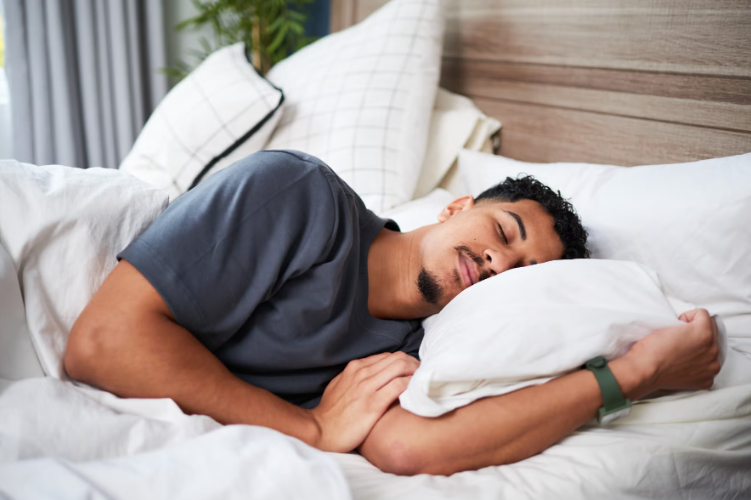
Runners thrive on clear targets. We know how many daily and weekly kays to cross off, how much fuel to take in for maximum energy, and exactly what paces will lead to an elusive PB. While we have most of our training planned out, there’s a stretch of time every single day that often goes unchecked: our time asleep.
…sleep is one of the most powerful performance and recovery tools out there…
Many runners have full-time jobs, families, and social lives that leave little time for shuteye. However, sleep is one of the most powerful performance and recovery tools out there, and getting an insufficient amount every night can derail your progress in training.
With this reality in mind, we set out to find the absolute minimum amount of sleep a runner needs to train effectively and race well, in an effort to support those with busy lives who still crave peak performance.
The answer, unfortunately, isn’t quite so simple, according to neurologist and sleep medicine physician Jeffrey Durmer, MD, PhD, who has spent more than 20 years studying and applying sleep science with professional athletes.
Sleep is the body and brain’s system for dynamic recovery, “so every individual has their own bespoke sleep requirements,” says Durmer.
While there’s no set-in-stone minimum that works for everyone, experts recommend a range that gives most people the best chance of recovering well and avoiding the performance consequences of insufficient sleep. Hit the target, make sleep part of your training routine, and you’ll increase your ability to handle hard workouts, train consistently, and translate your fitness into faster racing.
Experts identify the ideal sleep goal for runners, explain what happens when you miss it, and show how to use sleep as a practical recovery and performance-boosting tool. Find out more below.
What’s the Minimum Sleep Target?
The National Sleep Foundation recommends seven to nine hours of sleep as the general target for most adults.
“Within this window, there’s sort of a target zone,” Durmer says. “It’s around seven to eight hours.”
David Garley, member of the Royal College of Physicians and managing director of The Better Sleep Clinic in the United Kingdom, who regularly treats sleep disorders, draws a practical danger line at six hours. “I would say for most athletes, if you are habitually sleeping below six hours, then this is very likely to lead to sleep deprivation,” he says.
Six hours, therefore, should represent a floor to avoid rather than a baseline to hit. If you’re hovering around six hours and still feel tired during the day, struggle to recover, or notice your workouts suffering, consider those symptoms as evidence you need more sleep.
In Durmer’s experience, regularly dropping below roughly six and a half hours is where risks for injury in athletes and overall poor health begin to rise. On the other hand, consistently sleeping more than nine hours may signal poor sleep quality or efficiency rather than a need for more sleep.
Training load can push a runner’s needs toward the higher end of the spectrum, Durmer continues. Exercise breaks down a molecule called adenosine triphosphate (or ATP), a process cells use to supply energy. Your body’s use of its ATP stores throughout the day contributes to your biological pressure to sleep every night – that feeling of tiredness that starts to sink in late in the day. Then, when you do fall asleep, your body uses that time of rest to replenish ATP and prepare for another day.
“There are metabolic demands on athletes that are much higher [than the average person],” Durmer says.
Runners regularly completing hard workouts such as threshold sessions, speed intervals, or even long runs common in most training plans may need a baseline closer to eight or nine hours of sleep “just for the recovery period to adequately replenish your energy,” says Durmer.
Additionally, sleep helps deliver the adaptations runners want from the aforementioned workouts. Much of the body’s growth-hormone activity occurs during deep, non-REM sleep after training, explains Durmer, which supports your recovery. Cutting sleep short may therefore limit the benefits you receive from the work you already completed.
What Insufficient Sleep Does to Your Running
One of the first changes runners may notice after a poor night’s sleep is that running feels harder.
“Put simply, the perception of work goes up,” Durmer says. With a lack of sleep, fatigue arrives more easily, and the psychological task of managing a hard effort becomes more difficult. This shift can undermine confidence during a workout even if your physical capacity hasn’t actually changed significantly, Durmer explains.
A 2025 meta-analysis of 45 studies done on athletes and their sleep habits supports Durmer’s conclusion. Of those 45 studies, researchers examined 16 specifically on aerobic endurance, measured by performance tests like self-paced 30-minute runs, and 12 on rate of perceived exertion (RPE). Their analysis found sleep deprivation significantly increased RPE while impairing aerobic endurance in athletes.
Insufficient sleep can also affect attention, judgment, and even running form, as sleep-deprived athletes are more likely to overlook details or make poor decisions, Durmer says. “Your form may suffer more so than your power, and that can actually cause injury,” he adds. Meaning a runner might still have enough energy to force a hard session while lacking the proper focus and control to execute it safely.
The meta-analysis found broader physical effects of sleep deprivation, too. It reduced explosive power, maximum force, speed, and skill control. A small change to any one of these elements matters when you’re training to knock a few seconds off a 5K PB or a couple of minutes from your personal-best marathon. Over time, repeated poor nights of sleep can also compromise the overall consistency of your training that’s necessary to build fitness.
It’s important to remember one restless night will not crush your training; we’re human, after all. But your planned workout for the day may still need to change. If you wake up exhausted, Durmer recommends reducing the intensity of your workout to something easy. For example, if you only got five hours of sleep and you wake up exhausted on a speed workout day, swapping the high-intensity effort with an easy run allows you to prioritise your recovery and return to the demanding workout once your body is more well-rested.
Why You Need to Pay Attention to More Than Duration
The number of hours you log tells only part of the story. Durmer encourages anyone he works with to evaluate sleep through three dimensions: duration, timing, and quality (or DTQ).
Duration, of course, is the amount of sleep you get each night. Seven to eight hours is the target, with more potentially required during demanding training. Remember: Eight hours in bed doesn’t necessarily equal eight hours asleep.
Timing refers to exactly when you sleep within a 24-hour cycle. Durmer considers the time you wake up the most important element to prioritise. Keeping your wake time within the same 30-minute range every day helps stabilise your circadian rhythm and produce more predictable sleepiness at night, he says. Light reinforces your sleep schedule, too. Seeking natural or bright light in the morning supports wakefulness, and reducing bright light and screen time a half-hour or more before bedtime helps you fall asleep at night.
Quality describes what happens after you fall asleep and whether or not your time asleep actually leaves you restored. If your sleep duration and timing appear solid but you still feel exhausted, simply adding another hour may not solve the issue. Snoring, breathing pauses, insomnia, or restless legs can interfere with sleep quality and may warrant evaluation by a sleep specialist.
One athlete may spend more time in restorative deep sleep, while another may sleep more lightly, Garley explains. Two runners can log the same duration and wake up feeling very different.
Durmer cautions against depending on sleep scores to diagnose these feelings. A device might say you slept well when you actually feel terrible, or report a poor night’s sleep when you feel your absolute best. “Don’t use a number,” Durmer says. “Use how you feel.”
A simple written log including your sleep and wake times, perceived recovery level (from absolutely wiped out to this is the most rested you’ve ever been), and, perhaps most importantly, your workout quality, can help you identify patterns in your sleep without becoming fixated on a proprietary score.
How to Make Sleep Part of Your Training Plan
“Schedule your sleep, just like you do your workouts,” Durmer says. “Most people think of sleep as what you do at the end of the day. It’s actually the beginning of tomorrow.”
Treating sleep as part of training cannot guarantee a PB. But it can help you absorb more of the work you are already doing and arrive at the starting line prepared to use the fitness you have built.
Use these strategies to better prioritise your sleep.
1. Actually Put Sleep on Your Schedule
Schedule your sleep the same way you do your mileage, strength work, and nutrition instead of leaving it to whatever time remains in your day. Expand it when training volume or intensity increases; an extra hour can do wonders for recovery, and protect it especially following singular hard workouts.
Durmer also suggests scheduling more than your normal duration of sleep for up to three days following your race to ensure your body has the recovery time it needs after your hardest effort.
2. Create a Consistent Wind-Down Routine
Building a repeatable 15- to 30-minute routine before bed is one of the simplest strategies that can help ensure you maintain each of the “DTQ” elements of sleep, Durmer says. In addition to reducing light and eliminating screens, reading for pleasure and practising calming breathing exercises can help your body settle into sleep more easily.
Durmer recommends a warm (not hot!) shower, followed by a brief cooling-off period before you climb under the covers. Limit late-night caffeine and alcohol consumption, especially in-season, which can also interfere with sleep.
3. Avoid Exercise Right Before Bed
A study published in 2025 and involving more than 14 000 participants over the course of a year (more than four million nights of sleep) showed an association between evening exercise – particularly highly strenuous activity – completed less than four hours before bedtime and delayed sleep onset, shorter sleep duration, lower sleep quality, higher resting heart rate, and lower heart rate variability, all of which negatively affect recovery.
While Durmer recommends morning or midday exercise for every athlete, he also understands this schedule is simply not possible for everyone. So, if evening is your only opportunity to run, try to finish your workout two hours before you plan on going to bed—at least. Your nervous system needs time to calm down after exercise, and the process often takes two hours or more, Durmer explains. If you don’t, you elevate your risk of the negative effects outlined in the study.
After evening workouts, stretch, foam roll, and do calm breath work to help the wind-down process, Durmer says.
4. Create a Sleep Buffer Before Races
Durmer recommends adding 15 to 60 minutes to your nightly sleep allotment in the weeks and days leading up to a big race. It won’t create extra fitness gains, but it can help provide a buffer against anxiety, travel, and schedule changes from disrupting prerace sleep.
5. Use Naps as a Supplement
Let’s be real: Most of us who work full-time jobs and have families or social obligations may not be able to take advantage of midday naps like pro runners do. However, for the lucky few with a free Sunday afternoon every once in a while, Durmer says napping can serve as a great supplement for nighttime sleep.
A 2021 review of 14 sleep studies outlined that for athletes, longer naps (90 minutes, ideally) resulted in better improvement in physical and cognitive performance and lower induced fatigue in those who are chronically sleep-deprived. Meanwhile, another meta-analysis published in 2024 examining the health outcomes of habitual nappers found the best duration is 30 minutes or less, which may fit better into your schedule.
Durmer does recommend 60- to 90-minute naps if you’re looking to increase your daily sleep duration, as it can help you feel more refreshed. However, he also says regularly needing naps to function normally despite adequate time in bed may indicate poor sleep quality and may require a specialist’s care.
This article was first published on the Runner’s World USA website.
READ MORE ON: rest and recovery SLEEP sleeping as a runner