
The 5-Minute Habit That Helped Me Recover Better and Run Stronger
Experts explain how vagus nerve stimulation supports recovery after tough workouts.

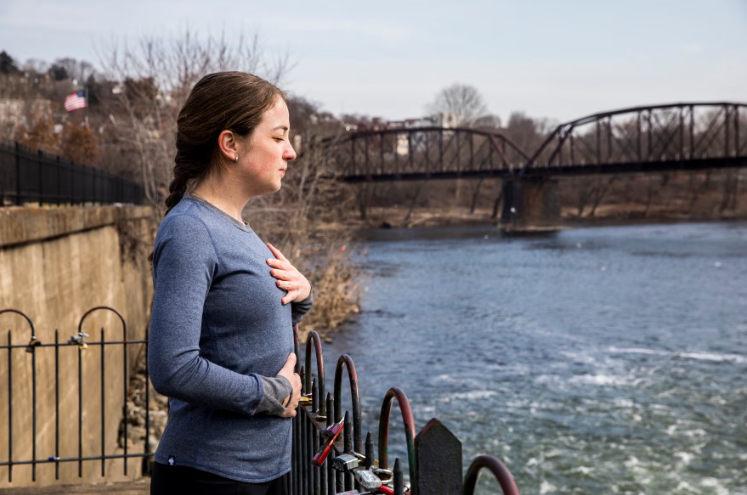
In order to recover better after hard training sessions and perform again the next day, we runners spend plenty of time tweaking mileage, fuelling, and turning to gear like compression boots. But we often overlook the underlying mechanism that governs how quickly we actually bounce back: the vagus nerve.
The vagus nerve is “the most complicated highway of nervous system information that’s relayed between your brain and most of your body,” says Jamie Tyler, PhD, a professor at the University of Alabama, who has extensively researched vagus nerve stimulation (VNS).
The vagus nerve is responsible for shifting us out of “fight-or-flight” mode and into “rest-and-digest” recovery. VNS, using structured breathing techniques to boost vagal activity, can improve recovery and therefore help you perform better.
To see if the science held up in real life, I spent a month trying a few different VNS techniques. Here’s everything you need to know about how the practice works and the surprising benefits I experienced during my 30-day experiment as a runner.
What Is Vagus Nerve Stimulation, Anyway?
To understand what VNS actually is, it’s important to know more about the vagus nerve.
You have two vagal nerves, which run down each side of your body, from your brainstem to your abdomen, and they go through organs like your heart, lungs, and digestive system, according to sports psychologist Paul McCarthy, PhD.
The main role of the vagus nerve is to help your body shift from states of stress, activation, and effort into states of recovery and restoration, McCarthy explains. “For runners, this matters because training is essentially controlled stress. The ability to switch off effectively after a hard session is a key part of adaptation and recovery,” he says.
Vagus nerve stimulation refers to practices designed to increase vagus nerve activity and encourage your body to move toward a state of recovery more quickly, according to McCarthy. Traditionally, this involved medical devices that deliver electrical stimulation, but many athletes use noninvasive techniques such as:
- Slow diaphragmatic breathing
- Extended exhalation breathing
- Resonance frequency breathing (a slow breathing technique – around six breaths per minute – that synchronises your heart, lungs, and nervous system)
- Mindfulness and meditation
- Cold water exposure
- Humming and singing
How to Stimulate Your Vagus Nerve
Below are three of McCarthy’s favourite VNS exercises for runners. He recommends doing these exercises in the morning, evening, or both. He also suggests doing them immediately after harder runs to encourage recovery.
1. Extended-Exhale Breathing
Why it works: Longer exhalations promote parasympathetic activation, according to McCarthy.
How to do it:
- Sit comfortably.
- Breathe in through the nose for 4 seconds.
- Breathe out slowly through the mouth for 6-8 seconds. Keep shoulders relaxed.
- Continue for 5-10 minutes.
2. Resonance Breathing
Why it works: This focuses on approximately six breaths per minute and is commonly used to improve heart rate variability, according to McCarthy, which can signal improved recovery and training readiness.
How to do it:
- Sit comfortably.
- Breathe in through the nose for 5 seconds.
- Breathe out through the nose for 5 seconds. Maintain a smooth rhythm.
- Continue for 5-10 minutes.
3. Diaphragmatic Breathing
Why it works: Diaphragmatic breathing stimulates the vagus nerve to turn off your body’s stress response and turn on relaxation, according to Johns Hopkins Medicine.
How to do it:
- Sit comfortably.
- Place one hand on your chest and the other hand on your stomach.
- Allow the stomach to rise more than the chest as you inhale.
- Exhale slowly and completely.
- Continue for 5-10 minutes.
The Techniques I Tried
I tried all three of these vagus nerve stimulation tactics twice a day, cycling between the three every evening and after all my daily workouts. The most challenging part was doing them for five minutes straight.
I’ve never been one for meditation, so I wasn’t used to doing something like this for large chunks of time. (Yes, five minutes is a large chunk of time to do absolutely nothing but breathe!)
So I decided to work my way up to five minutes. I started by setting a timer for one minute, and after I did this successfully for one or two days, I set my timer for two minutes. I continued doing this until I hit five minutes. (My next goal is to work up to 10 minutes per VNS session!)
Consistency is important when it comes to VNS, according to McCarthy. “The goal is not to ‘stimulate’ the vagus nerve occasionally. The goal is to develop a more resilient nervous system over time,” he says.
How Runners Can Benefit From Vagus Nerve Stimulation, and How It Helped Me
Both Tyler and McCarthy agree that VNS has the biggest effect on recovery between runs. “VNS reduces inflammation and helps promote recovery,” Tyler says.
1. Faster Easy Runs
Greater vagal activity is associated with faster heart rate recovery and improved autonomic nervous system balance after exercise, according to McCarthy. The autonomic nervous system controls automatic functions your body needs to survive, like breathing and your heart rate, meaning VNS helps slow your breathing and heart rate down.
In a small 2026 study in Nature, 60 participants who did auricular transcutaneous VNS (a technique that delivers mild electrical impulses to the outer ear to stimulate the auricular branch of the vagus nerve) for 20 minutes right after walking on a treadmill for 30 minutes saw greater reductions in blood pressure, perceived fatigue, and lactate in their blood compared with those who didn’t do VNS. Additionally, those who did VNS saw improvements in how quickly their heart rate and breathing went back to normal.
I did a few minutes of VNS breathing exercises after my easy runs and interval workouts on the treadmill, and I was shocked at how quickly my heart rate settled back down to baseline afterwards. Just like the study participants, I noticed a difference in my tiredness levels with and without VNS. Before VNS, an intense speed session could leave me feeling wiped out for hours after. But after only a few days of starting VNS, I noticed I had more energy throughout the day.
2. Improved Heart Rate Variability (HRV)
HRV refers to changes in the time between each heartbeat. Your heart isn’t supposed to beat like a metronome. Instead, a healthy heart naturally speeds up and slows down from moment to moment. This constant variation gives your cardiovascular system the flexibility it needs to react instantly whenever you face sudden physical effort or emotional stress.
HRV is often used as an indicator of recovery and readiness for your next workout, according to McCarthy. “Higher vagal activity is linked to higher HRV and greater resilience to training stress,” he says.
3. Better Sleep
Doing VNS on a regular basis can help you fall asleep more easily and improve the quality of your sleep, according to McCarthy. And sleep, he says, is where much of the adaptation to training occurs.
I’ve always been intensely jealous of people who can fall asleep as soon as their head hits the pillow. That’s never been me…until I started incorporating VNS into my daily routine. I’m not exaggerating when I say I was able to doze off within 20 minutes of doing VNS for the first time; a huge difference from the usual one or two hours it typically takes me.
This helped me wake up feeling refreshed as well, which rarely ever happens. Will I ever become a true morning person? I’m going to keep doing VNS before bed to find out, but I have high hopes.
4. Reduced Psychological Stress
Better vagal regulation can help reduce feelings of being wired, anxious, or mentally activated after training or before competition, McCarthy explains. “VNS is particularly useful if you struggle to switch off after evening workout sessions,” he says.
As I mentioned, I’ve never really been a morning person. It’s hard enough waking up for work, never mind a workout. While I usually run in the middle of the day or right after work when it’s light outside, I tend to push cross-training workouts, such as strength training or indoor cycling sessions on my Peloton, until later in the evening.
These workouts usually leave me amped up for hours, and probably (read: definitely) contribute to the fact that I have a hard time falling asleep at night. Doing VNS after these evening workouts has really helped me wind down at night and fall asleep faster.
5. Improved Emotional Regulation
“Athletes with stronger vagal tone tend to demonstrate greater flexibility in responding to pressure and adversity, which can be beneficial during training blocks or races,” McCarthy says.
Indeed, athletes who can easily control their vagus nerve tend to be able to stay right in the sweet spot for peak performance – alert and energised without getting overwhelmed or overly anxious, research shows. This helps them avoid both being too flat and being too stressed out to perform their best.
This article first appeared on the Runner’s World USA website.
READ MORE ON: breathing techniques recovery vagus nerve