
Oceans of Wisdom: Perform At Your Best on Race Day

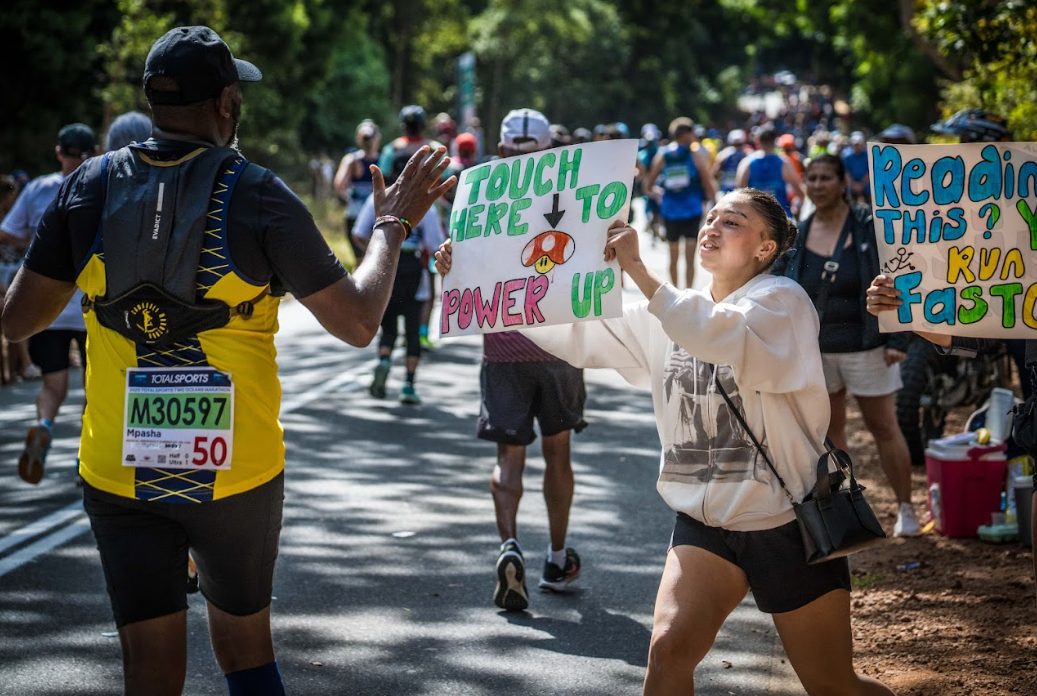
It’s Totalsports Two Oceans time, and you’ve spent hours on your feet training your legs to handle the distance, come early April. Whether you’re running the Two Oceans 56km or 21.1km, this advice from the experts will ensure you perform at your best on race day.
We’ve put together the best advice from the most knowledgeable coaches and runners in the sport…
Now you need to make sure it all comes together on race day. No matter how well you train, the morning of your event can sometimes throw a few curveballs and ruin even the best-laid plans. We’ve put together the best advice from the most knowledgeable coaches and runners in the sport to ensure all that hard work pays off when the start gun is fired.
Tech Overload
Modern smartwatches are full of valuable training data, enabling us to carefully monitor heart rate, effort level, sleep and recovery, says endurance coach Erin van Eyssen of Flat Rock Endurance. “But I think people can become obsessive about the data, and sometimes the numbers muddy the waters. I use the numbers if it helps an athlete perform better, but sometimes those numbers are more important retrospectively, rather than during an actual run.”
Van Eyssen and his team subscribe to the RPE (Rate of Perceived Exertion) model that suggests an effort ranking of 1-10 based on how much effort you’re putting in, from 1 (very easy) to 10 (going flat out). Learn to understand your own RPE in training, and it’ll be a valuable tool for you on race day.
The Art of Climbing
For events like Two Oceans, mastering hills is a key component of race-day success. Van Eyssen’s experience in training trail runners has helped him develop a solid strategy for the inclines.
“Climbs shouldn’t take you into the red zone,” he says. “You need to get comfortable enough to climb aerobically and develop endurance on the hills. Elites actually climb within their ability, so they can be faster on the flats and downhills. So you need to be comfortable enough that your cardio and legs aren’t overly taxed.”
Know Your Race Pace
Taking on an event like Two Oceans presents a pacing challenge. But Van Eyssen has a simple strategy: be realistic, based on your previous events. “Most people will have run a marathon to qualify for Two Oceans; so let history predict your ability,” he says. “Most will run a pace similar to the one they ran in their marathon, and it’s a good place to start. If you find you have lots in reserve, then you can push a bit harder in the second half.”
Maintain Equal Effort
Avoid pushing hard on the climbs, says Van Eyssen. Try to even out your effort level across the hills, flats and downhills. Intensity drains the battery fast.
Avoid Starting Too Fast
You’ll rarely see an experienced runner going faster in the first few minutes of their run than at any other point; yet this start-fast-then-fade pattern is typical for new and inexperienced runners.
Experts agree that this is one of the biggest obstacles to getting fitter and finishing. “The sport is set up for new runners to be tempted to train too fast, too soon,” says Greg McMillan, who has coached everyone from beginning runners to Olympians.
Julia Lucas, an elite marathoner and coach, cites another reason for new runners starting too quickly: “They’re excited, so they leap into the run with full enthusiasm,” she says. “That’s not something I ever want to totally drill out of an athlete, but if that enthusiasm can be redirected towards the middle of a run, it’ll make for a better experience.”
That enthusiasm can definitely take hold at the beginning of the race, because the crowd surges, and it feels wrong to let people get a jump on you. And it may be fine to push yourself through an entire 5K, but longer races require a more conservative pacing strategy.
“I tell new runners to start much, much slower than they think they need to,” Lucas says. “This not only helps warm them up slowly and so keeps them safe, but also teaches them to develop a more intuitive understanding of their own pace.”
Pre-Race Planning
“If you’re racing a 10K, there’s very little time for enjoyment. But strange as it may seem, you can actually go and enjoy an ultra,” says Two Oceans and Comrades gold medallist Carla Molinaro. “Physically, when you train for an ultra, you never go the full distance. Take Comrades, for example – I know I’ll be racing on the road for about six hours, yet my longest training run was only three and a half hours.
“Yet you still have to prepare for the mental battles that will invariably come on race day. So I like to sit down and draw or sketch the race route and identify sections that are going to be tough. For example, in terms of steep hills, or rising temperatures, etc, so that when it actually happens, I know what’s happening, and it’s not a surprise. Let’s say that training is more about the physical aspect, and then on race day, that ratio switches over to a bit more mental.”
Mental Planning
It’s crucial to have coping mechanisms on race day, Molinaro notes. “You have to plan for all eventualities, so that when something happens, I can say, ‘That’s fine, you knew this was going to come.’ The trick is to identify those potential points when they come.
“I sometimes also have various mantras going through my head. My running friend Paul gave me this one before world champs: Big gear, no fear!”
Adapt
You have to be adaptable, says Molinaro – race it as it unfolds. “It’s important to know when to push hard, and when to dig in. It’s such a fine line.”
Fuelling
In the late 80s, 90s and even 2000s, the pre-race carbo-loading diet was South African ultra-running’s default setting.
“But I think the carbo-loading approach has changed, over the years,” says Molinaro. “It seems research now shows you don’t really need the depletion phase, but it’s still advantageous to up your carbo intake before race day.”
With this in mind, three days out from race day, she goes easy on fibre. “So I’ll basically cut out fruit and veg. I’ll eat oats and honey for breakfast, chicken and rice for lunch, and then for dinner, maybe some eggs, with spinach and tomato for flavour,” she laughs.
“During the day, I’ll snack on things like Rice Krispies and energy bars; so basically keeping it quite boring and plain, mainly white and beige-coloured food.”
“Pre-race day, then, I’ll up the carbs by 10g per kilogram of body weight; and if I train the day before, then maybe 11-12g per kilogram – all in all, about 500-600g of carbs. I’ve found that apple juice is a very easy source of carbs. And then I do confess to having a liking for those chewy sweets from Woolies!”
Travel Right
If you need to fly to your race, make sure you carry your race shoes and kit with you, says Molinaro – don’t check it in. If your bag is delayed, at least you’ll have everything you need to race on you, and you won’t have to stress.
Get all the latest advice and more in the March/April issue of Runner’s World.
READ MORE ON: half marathon prep taper advice two-oceans-marathon ultra marathon prep