
Worried About the Final Marathon Miles? Train to Finish Strong
Avoiding fading in those final miles requires training for them. Here’s how.

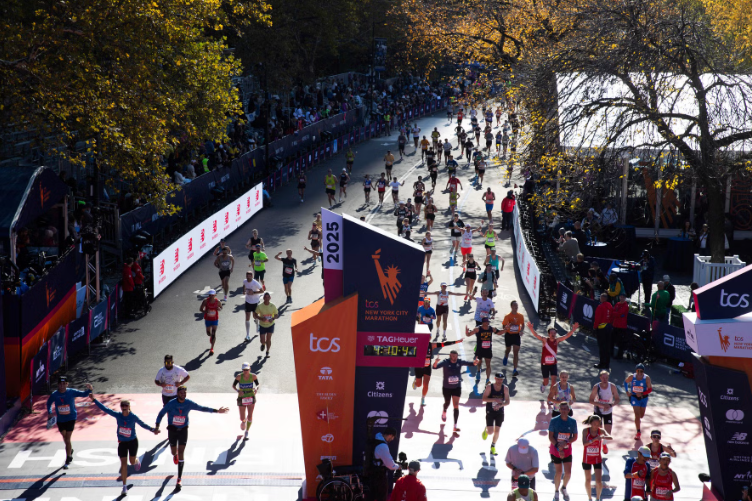
One thing is inevitable in the marathon: The final kilometres will feel really hard. You might think your peak week long run is the biggest indicator of how prepared you are to crush the entire 42.2km – and it’s true that you should feel confident after conquering that distance – but other parts of your training may matter even more.
In other words, your entire training plan should prepare you for the last 10km (or so) where your legs get heavy, and you’re fighting to get to the line.
“The last few kilometres are definitely a different breed, and people react either one of two ways,” says Christine Rockey, RRCA-certified run coach, certification instructor, and principal lecturer at a US University. Runners are either extra motivated to push to the finish line and get it done, or they trek through the final miles in agony, wondering how they’ll possibly make it to the end, she explains.
You don’t have to let fear around the final kilometres get in the way of having a successful race finish. From specific workouts to minor lifestyle tweaks, these training tactics help you hold your pace in the late stage of the marathon and confidently pass competitors as you cross the finish line.
1. Simulate Late-Race Fatigue
Incorporating specific workouts that target fatigue resistance is a straightforward way to prepare your body and mind for the final miles of the marathon.
Rosetti generally recommends incorporating one of these workouts every three to four weeks throughout your buildup. You can choose which workouts are best for you, but remember that a marathon-pace long run can act as a good way to test your fitness when you’re about a month out from race day, to see if you’re really prepared to hold your goal race pace.
Marathon Pace Workout
Why it works: Every runner should include marathon pace miles somewhere in their training, Rockey agrees, particularly in the later parts of long runs. She explains a marathon pace long run builds the confidence you need to hold your speed when you fatigue.
Marathon pace should feel just a notch above easy pace or about a 5 or 6 on a scale of 1 to 10 for rate of perceived exertion (RPE), with 10 being maximum effort. Easy pace hits around a 3. “If you’re finding your marathon pace is hard in a long run, especially if you’re only doing eight kilometres at that marathon pace, then you might need to reconsider your goal marathon pace,” to something more manageable, says Rockey.
How to do it:
- 5km at easy pace to warm up (RPE 3)
- 8km at goal marathon pace (RPE 5)
- 5km at easy pace to cool down (RPE 3)
Progression Run
Why it works: Rockey also finds long progression runs help make you a more successful, consistent runner. “We encourage our athletes to run negative splits because that means you’re not pushing it too hard in the beginning,” Rockey says, which sometimes leads people to fall off their paces by the end of their efforts.
This workout teaches you how to aim for negative splits and avoid starting too fast before you get to the end of your effort, Rockey explains. Because you’re only going as fast as your marathon pace, you should be able to hold that effort without burning out.
How to do it:
- 8km at an easy pace to warm up (RPE 3)
- Decrease your pace by about 15 seconds every 3km for about 6 to 12km, depending on where you’re at in your plan for your weekly long run (RPE 5-6)
- 8km at an easy pace to cool down (RPE 3)
Threshold Work
Why it works: Threshold pace generally improves your speed endurance and helps you hold onto faster paces through fatigue, Rosetti says.
A threshold kilometre in the middle of a long run – though a pace you’ll never touch in the marathon – leads to fatigue but doesn’t fully burn you out, he adds. The downshift back to goal marathon pace at the end gives you the confidence you can handle running marathon pace when you’re really tired. This makes you a more well-rounded runner by adding variation of paces to your training, improving endurance and fatigue resistance at once.
As an example, a four-hour marathoner running at least 50km per week might consider the following:
- 1.5km at easy pace (RPE 3)
- 6.5km at goal marathon pace (RPE 5)
- 1.5km at threshold pace (can stick to 30-35 seconds faster than goal marathon pace, or roughly an RPE 7)
- 6.5km at goal marathon pace (RPE 5)
- 1.5km at easy pace (RPE 3)
Bunched Long Runs
Another method to simulate fatigue would be opting for a bunched long run, Rosetti suggests, where you run 16km at easy pace, then 12 to 15 hours later, run 16 to 20km at your goal marathon pace. Within that timeframe, you’re bunching them close enough together to give yourself a break and reduce the risk of injury, while still physiologically running on fatigue in the second session.
2. Spend More Time on Feet Outside of Running
While logging a 20- to 22-mile peak week long run is a classic way to prepare for the marathon, Rockey says another aspect to consider is what you’re doing outside of those long runs. Instead of immediately spending the rest of your weekend horizontal on the couch or remaining sedentary, Rockey suggests doing something else mildly active for the rest of the day after your long runs to mimic continued fatigue in your legs. This goes for easy runs and harder workouts, too.
Spending more time on your feet can look like regular weekend activities, including taking your kids to soccer practice or grocery shopping, standing or taking walk breaks more often at a desk job, or even going for a daily walk. This can also help promote blood flow in your leg muscles to help with recovery and avoid getting too stiff or sore.
3. Lock in Your Running Mechanics
Long runs and spending time on your feet help condition you to handle running through late-race fatigue, but homing in on your running mechanics is also a crucial piece to preventing form breakdown late in a race, Rosetti says. One way to do that is through short, fast repetitions, like a 200 metre workout.
“For a marathon, you want to be as economical as possible, so you’re not wasting energy,” Rosetti says. “If you’re very inefficient and waste a lot of energy, then you’re going to suffer more at the end of these long races.”
200 metre workout:
- Warm up with 1.5 to 3km of easy running
- 8 x 200 metre repeats near your mile pace, with 200 metre jogging recovery between
- Cool down with 1.5 to 3km of easy running
Rosetti explains that incorporating short speedwork that makes up about five percent of your weekly mileage from the beginning of your training plan helps establish a solid running economy before getting into mileage increases and longer runs.
“No matter what race you’re training for, all these different workouts work as sort of a family to improve your fitness for the endurance event,” says Rosetti. “That’s the best way to improve your economy, so you need to be doing that in conjunction with your other types of workouts and long runs.”
4. Fuel From the Start of Training
The earlier in your training that you can start fuelling, the better off you’ll be in the final miles, our experts agree. Aim to grab fuel on your first long run, especially those longer than 90 minutes and even those that include marathon or threshold miles (especially those!). The typical recommendation is 30 to 60 grams of carbs per hour, but that can go up to 90 grams for race day. The key is starting small and working your way up to taking in more fuel.
Rockey adds that we typically can store about 2,000 calories in our systems at a time, which will get many runners to around mile 20, or when most runners tend to hit the wall. But you want to practice taking in fuel well before your stores are empty.
Rosetti urges runners to consider training your gut from day one of training so your body gets a chance to become more efficient at storing and processing fuel on your runs. Many runners don’t practice fueling enough and then wind up running underfueled and falsely attribute their race-day issues to undertraining. “You could do all these long runs, do the rep work, do all the right training, but if you’re not getting enough carbs per hour, forget it,” he says.
5. Create a Mental Plan
Every runner needs a mental plan or mantra to dig deep during hard miles. There’s a reason for the saying, “When your legs get tired, run with your heart.” Rockey’s go-to tip for pushing through is doing mental math, specifically figuring out how long it takes her to complete a kilometre. For runners who aren’t super fond of mental math, you may also recite your favourite poem or song lyrics, Rockey adds.
Trying out a few different mental tricks throughout training, like during your marathon pace training runs, will help you land on a mantra or method to push through exhaustion in the final miles.
6. Consider Your Hard Work
Remember: The final kilometres of the marathon only last a matter of minutes compared to the months of training it took to get there. Most marathon training plans require at least 12 weeks of training, but often 16 weeks or more – that’s four to five months of regular running, which allowed you to get stronger and faster.
Your performance in the final kilometres is built from months of training where you’re tired, busy, recovering, and putting in the work – not from one epic long run, Rosetti explains. So trust in how much time you’ve given yourself to train and the adaptations that happened along the way. Think back on all the runs you pushed through to get to the finish and celebrate those months of hard work!
This article first appeared on the Runner’s World USA website.
READ MORE ON: marathon training race preparation threshold training