
This Golden Rule Could Save Your Marathon
After almost missing my corral too many times, I developed a strategy that melts away prerace stress.

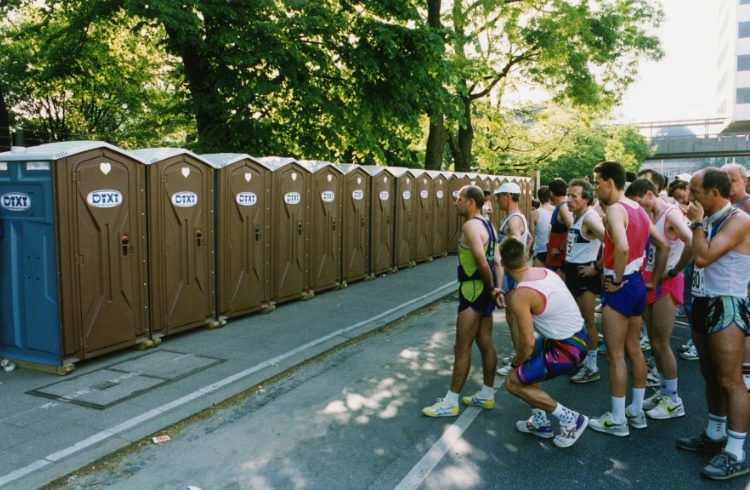
Most people have heard of Murphy’s law: Anything that can go wrong will go wrong. I have a modified “Predhome’s law” as it pertains to runners: If you don’t budget an extra 15-30 minutes for something to go wrong, you’ll wish you had.
In other words, my best piece of marathon advice isn’t necessarily about fuelling or pacing or shoes or straws. My best piece of marathon advice is to factor in a buffer, as your race morning rarely goes exactly to plan.
…sometimes life happens, and things don’t go according to plan.
It’s not that those other things aren’t important, but there’s one reality that can affect everyone from a front runner to a back marker; sometimes life happens, and things don’t go according to plan. Trust me, I would know.
I had a close call at the Cambridge Half Marathon in 2021. After a warm-up jog, I went to hit the bathroom, and the lines were overwhelmingly long, costing me an extra 15 minutes. After that, I was told I was only allowed to reach my corral by manoeuvring through every other corral, which took an extra 10 minutes. I made it with exactly two minutes to spare and was able to get a single stride out before the gun.
What really solidified it for me was the Philadelphia Half Marathon in 2023, easily the worst close call in my experience. I was staying at a hotel about a 2.5km jog from the security entrance, and after I did some Googling on how long security might take, I made a plan with a broken up warmup that factored in waiting in security in the middle. I would get through and then continue with strides and time to hit the bathroom. What I did not consider was that the security line was significantly longer than I planned and would take about 30 minutes longer than my budgeted time. I got to the start line on time, but only by skipping warmups and the bathroom line altogether, and I had to pee the whole race.
From then on, I made it a rule that to add an extra 15-30 minutes to be lost to bullshit after mapping out race day details. If it’s a small, local race, it can be more like 15 minutes. But a larger race requires more like 30 minutes.
There are several ways that things could go wrong on race day. I could have transportation issues, such as waiting for an Uber or a train. It could also be longer lines than normal, such as bib pickups, security, or even getting to my corral. It could be that I suddenly realised that I didn’t grab everything I needed out the door and needed to go back and grab something.
Last year, I ran a race in Rhode Island. It can be a little slow getting to the course as traffic can get clogged up. But knowing that this could happen, I budgeted an extra 15 minutes just in case. And I sat in traffic completely relaxed. I was able to get my warmups in, hit the bathroom, and was able to run one of my best times.
I find that including this leaves me a little more relaxed on race day. All of this is really an attempt to work through a race day as it sometimes is, rather than hoping that things go perfectly. And ironically, it gives me a little more control over the situation.
In my mind, I’m not saying that things will happen, but if they did, it would be part of the plan all along.
This article first appeared on the Runner’s World USA website.
READ MORE ON: marathons pre race planning