
How To Stay Active As You Get Older, According to a 105-Year-Old
I started running to manage stress - I’m over 100 and still exercise every day

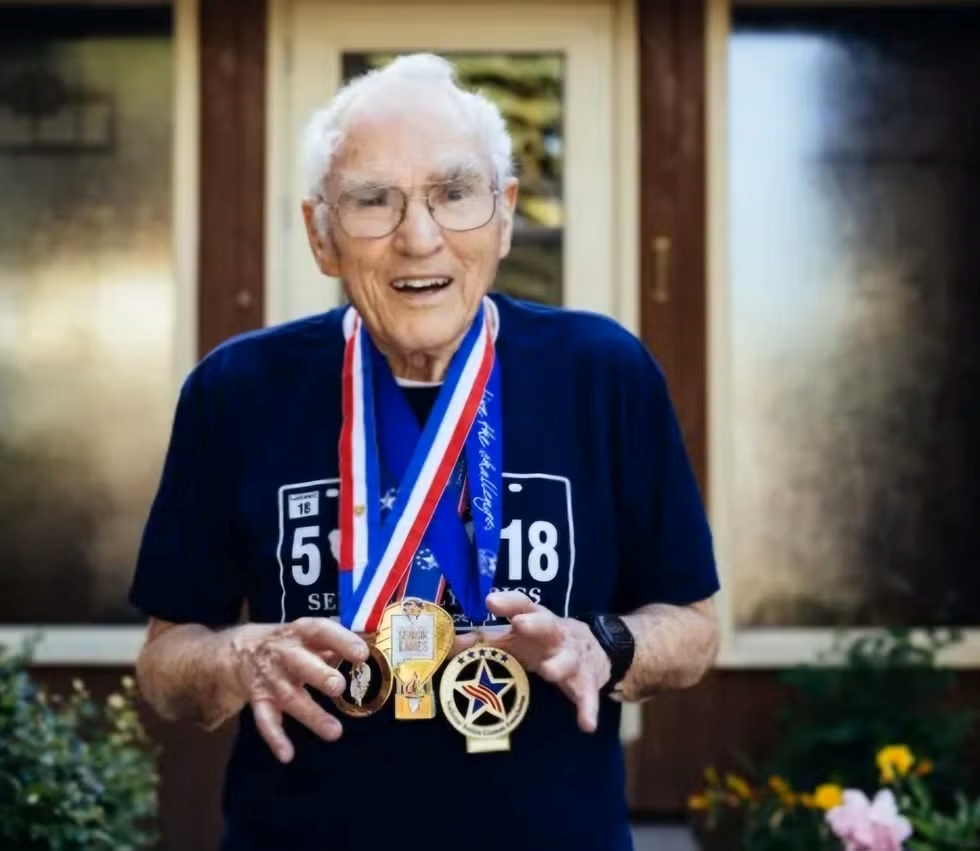
I started running over 60 years ago, shortly after I took on a new role as the dean of my local university and have gone on to break numerous age category records. I am 105 years old, and I continue to run and stay active.
To help deal with stress, I started running back when I was tasked with designing the university’s new science centre, a huge project for which I was responsible for raising the funds, which felt nearly impossible at the time.
Running also allowed me to focus on something other than work…
The reason I chose running over any other sport is that it’s beginner-friendly and doesn’t require much equipment. When I started, all I had was a pair of running shoes and exercise clothes.
I discovered that beginning my day with a run helped improve my concentration and focus. It was through running that I realised that not everything was important enough to get done, and some things I could save for the next day. Running also allowed me to focus on something other than work, and it helped me relax, which is why I fell in love with it.
Running with my furry friend
I enjoyed running solo, but the closest I’ve ever come to running with a buddy was when I had a furry friend named Rob, a German Shepherd who loved running. Whenever I had little motivation to get out of bed, he would come to my bedside and stick his nose in my face. This was his way of telling me I had no other choice but to run, which made it easier to get out of bed on those days.
My favourite place to run was, and still is, the golf course near my house, when people aren’t golfing, of course. When I first started, I ran based on time and considered the amount of time I had before work. On days when I had a busy schedule, I ran less. If I had more time on my hands, I would spend more time outdoors, clocking miles. I just went with the flow, rather than following a set route.
The university’s science centre was completed in 1969, and I eventually retired from the university in 1990, but I kept running as a part of my routine and started racing.
National Senior Games
I decided to compete at the National Senior Games in 1997 at 78 years old. This biannual competition allows older athletes to compete in 25 different sports, including road races and track and field events. To qualify, you must place top four in your age division on a state level the year before. I ran the 5km and 10km races that year.
In 2019, when I was 100, I set the record for the 100-metre in my age division at the Games with a time of 36.93, more than five seconds faster than the previous record. I still hold the number-one spot in that event. I also won the 400-metre, 200-metre, and 50-metre that year, all of which still stand in the top three fastest times for those 100 and older.
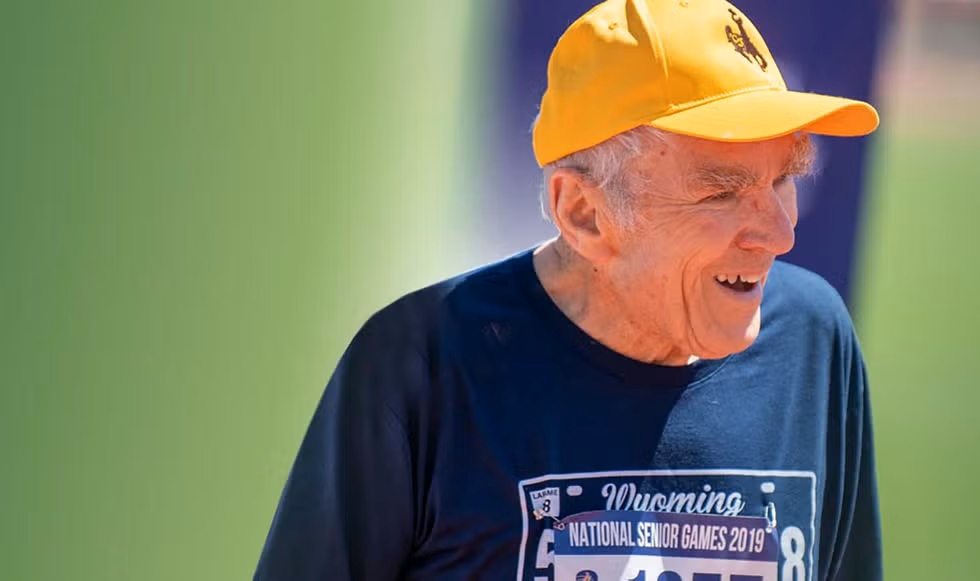
Nowadays, I spend most of my time walking and strength training with bodyweight exercises to improve my balance. As a record holder and a Wyoming Senior Games Hall of Famer, here are my secrets to staying active.
Make Exercise a Daily Habit: When I first started running, morning runs easily became a part of my daily routine, mainly because I found it easier to start my day by exercising, rather than splitting up my work day with a run. Though I wasn’t cleared to run in this year’s Senior Games, exercise is still a part of my daily life. Regular exercise, whether you’re running, strength training, or both, can help improve your quality of life. Adding balance exercises to your exercise routine can help improve your stability and agility as a runner. Also, as you age, these moves can help lower your risk of falling and improve your mobility.
Sign Up for Races: Participating in a race gave me a goal to work toward, and it could do the same for you. If you have a competition on your calendar, you have one more reason to stay consistent with your training. Plus, you get the opportunity to see how you stack up to other runners in your age group (and maybe earn some bragging rights if you win).
Pace Yourself: I learned the trick to running longer distances is to pace yourself, especially when you’re competing. You’ve got a long way to go, so it’s better not to give it your all in the first 100 metres. Instead, run at a pace that feels comfortable to you, and if someone passes you, so be it – as long as you run at your speed and cross the finish line. You’re not going to win them all; just finishing in a good time that you deem fit is good enough.
READ MORE ON: ADVICE motivation motivational people running with dogs