5 Marathon Recovery Tips to Get Back on Your Feet Faster
How to ease soreness, refuel well, and rebuild motivation after finishing 42km.

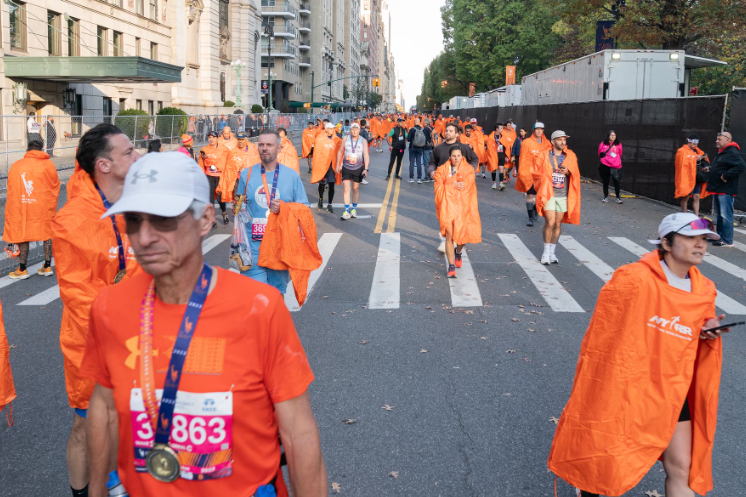
Ask any marathoner: Nothing beats the energy of race weekend to get you amped up to keep running. Feeling the weight of that finisher’s medal hanging around your neck has a magical way of erasing all the aches and exhaustion you pushed through for the past few hours (not to mention the past several months of training).
…that finish-line euphoria won’t keep sustaining you through continuous daily runs if you don’t recover fully.
But what you do in the hours and days immediately following 42.2km can determine how quickly you bounce back – not only physically but also how soon you’ll feel emotionally ready to get moving again. Marathons are draining, and that finish-line euphoria won’t keep sustaining you through continuous daily runs if you don’t let yourself recover fully.
After conquering 14 marathon finish lines in all seasons and a few back-to-back marathons too, I’ve learned a few key lessons about how to successfully get back to running post-race. Keep these in mind if you’ve just crossed a marathon off your list and want to lace up your running shoes again soon.
Don’t: Kick your feet up the entire rest of race day
The first time I ran the New York City Marathon, I lived in a fifth-floor walk-up apartment on the Upper East Side. Going down those stairs the next day was excruciating, but I went outside anyway and went for a walk, and my legs felt immensely better a day later, compared with when I didn’t take those steps after other races.
Obviously, you should give yourself some downtime and relax after a marathon, but when I make a point to walk around more often right after a race and to do some other light activity (like easy pedalling on my Peloton) over the following few days, it always helps my legs feel way better sooner. Sitting on the couch all day will only increase your stiffness.
Do: Treat yourself!
Regardless of whether you hit a PB, qualified for Boston, or barely made it over the finish line, completing a marathon is a big accomplishment. I’ve found that taking some time after 42.2km to celebrate and appreciate my body for what it can do, and my mind for what it can push through, is an important step before jumping right back into running. When I push ahead without taking joy and pride in what I achieved, I wind up feeling run down and unmotivated.
If you feel like having a decadent meal and celebratory beers as part of that acknowledgement, Jeff Gaudette, owner and head coach at RunnersConnect, says go for it! But to feel up to running again soon, have something nutritious first.
“The focus on recovery needs to be more dialled in if you’re going to do another race soon,” he says. “That means nutrition and refuelling a little more diligently. You can still enjoy pizza and beer, but make sure you get some protein and healthy carbs beforehand.”
Research backs this nutrient combo up: One 2018 study in Nutrients found that eating both carbs and protein immediately post-race helped marathoners’ physical fatigue, mental energy, and soreness improve within three days compared with those who ate carbs alone.
Don’t: Skimp on R&R
Your body just did a lot; give it some extra TLC to help your muscles recover faster. Gaudette recommends trying out all the “little recovery tricks” such as ice baths, dips in a hot tub, a massage, and seeing what helps you get back to 100 percent faster.
My fave: slipping on compression socks after a marathon and sleeping in them, too. Wearing them feels like my calves are getting a hug, and I always think my legs are a little less sore the next day when I use them. (Some research also backs up the benefits of compression gear for easing postexercise soreness.)
Do: Make a plan for training between races
If you already have another race approaching, recovery is even more important, as is the training you put in between races. My worst marathon performances were when I ran Boston to Big Sur (both races within two weeks); I had not trained well enough for the hills and probably didn’t do enough to help my body recover between the races, and I paid for it.
How you structure recovery and training between two races depends on how much time you have. “If they’re really close, like within two weeks, the entire focus is on recovery and getting your legs to feel as good as possible,” says Gaudette. (See: ice baths, massage, etc.) “If there’s a longer break between, say three to six weeks, then after you fully recover, you’ll want to have a week or two where you do some mileage and/or solid threshold work. Otherwise, you risk basically not training for five to six weeks, including the taper before the first race and then the time between the races.”
That’s enough time for your fitness to fall off and you to feel less prepared for race number two.
Do: Sign up for your next race!
If you don’t already have a race on the calendar, use that finish-line motivation you’re feeling now to look ahead for another race you want to take on, even if it’s months away.
I never feel as energised to take on another marathon as right after I finish one (and the days leading up to it). I’ve learned I’m most likely to sign up for another race if I use that momentum to register for one. And with your next race on the books, whether you’ll be aiming for a PB in another marathon or going for a chill 5K with friends, it’s that much easier to get back to running and clock miles consistently because the goal is right in front of you.
This article first appeared on the Runner’s World USA website.
READ MORE ON: marathon recovery recovery tips